EN
EN

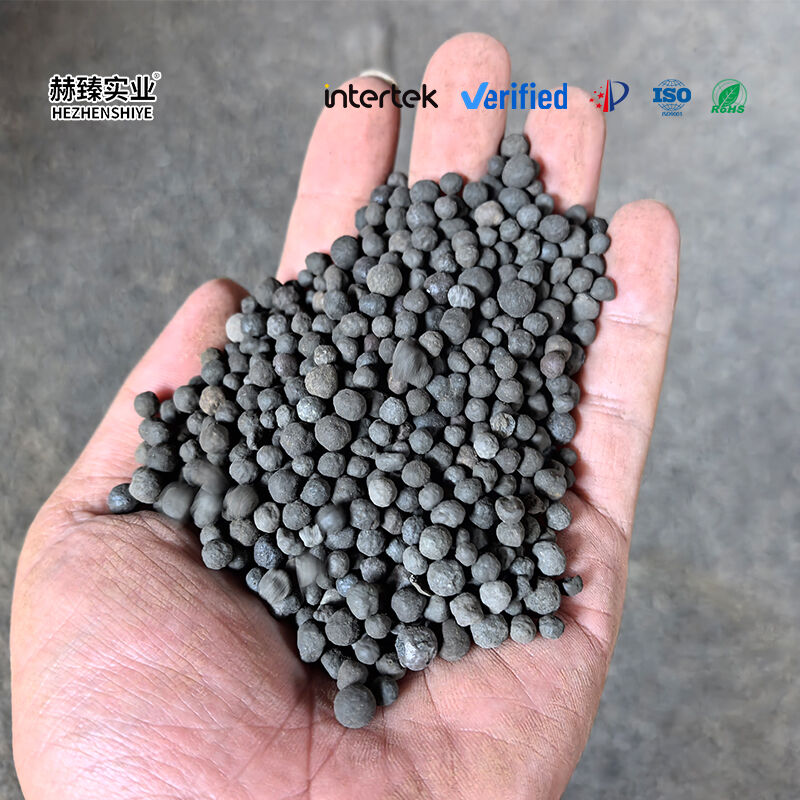
Lightweight expanded clay or ceramsite (Leca) is a high-performance product of the industrial market in a vast variety of constructions, horticulture, water treatment, and refractory. It has an excellent low density, high strength and thermal insulation, which has been attained through a highly controlled firing process. Being a professional manufacturer of non-metallic mineral products, Hebei Hezhen industrial Co.,Ltd. adopts the best technology of production in provision of the same quality and quantity of ceramsite used in different industries according to their requirements.
Raw Material Preparation and Formulation
Before the firing process, raw material choice is done. Natural clay, shale or other aluminosilicate materials with the appropriate mineralogical composition to expand when heated are more normally used to produce ceramsite. We have made good use of the local resource advantages in Hebei Hezhen where we have been able to gain high quality raw materials that have a consistent chemical profile. The raw materials are crushed, ground and mixed precisely to provide a homogeneous mixture. Additives are also used to modify expansion properties, or to modify some performance properties. It is a critical formulation step because the composition will directly influence how the material will behave during the firing procedure which will also influence the final quality of the ceramsite product.
Pelletization and Green Ball Formation
Once the raw material is obtained, it is pelletized into similar sized green balls. This is normally done through disc pelletizers or rotary drums where water and binders are sparingly added to enable agglomeration. The density and the size of the green balls must be strictly controlled, as these criteria affect the homogeneity of the firing, and the end features of the product. The special purpose processing equipment and our expertise technical staff ensures homogeneity with the morphology of the pellets that is the foundation of the optimum burning performance.
Preheating and Dehydration Phase
The green pellets are warmed up then they enter the firing zone at a large temperature. The temperature is gradually raised at this stage of the process to remove free water and begin dehydrating clay minerals. This controlled heat will eradicate rapid accumulation of steam that can cause cracking or spalling. Preheating is also the beginning of the process of converting the mineral structure to the following step of making the pellets swell. This step relies on the specific formulation of the raw material used and the length of time and temperature profile is strictly calibrated.
High-Temperature Expansion and Sintering
The high temperature firing is carried out in the kiln where it is possible to perform high temperature firing in the rotary kiln where the firing temperature ranges between 1,100degC to 1,300degC. As the preheated pellets are passed through this zone there are certain important reactions that take place at the same time. Carbonates and organic material dissolve, creating gases that create internal pores. Meanwhile, the aluminosilicate matrix begins to be soft and a viscous phase is created. These expanding gases are contained within this melted structure that makes the pellets expand and take their characteristic cellular structure. The result of this expansion is immense loss of density and maintenance of structural integrity through sintering of the outer surface partially. Temperature and kiln residence time must be precisely controlled in order to achieve the required balance between expansion, strength and density.
Cooling and Product Stabilization
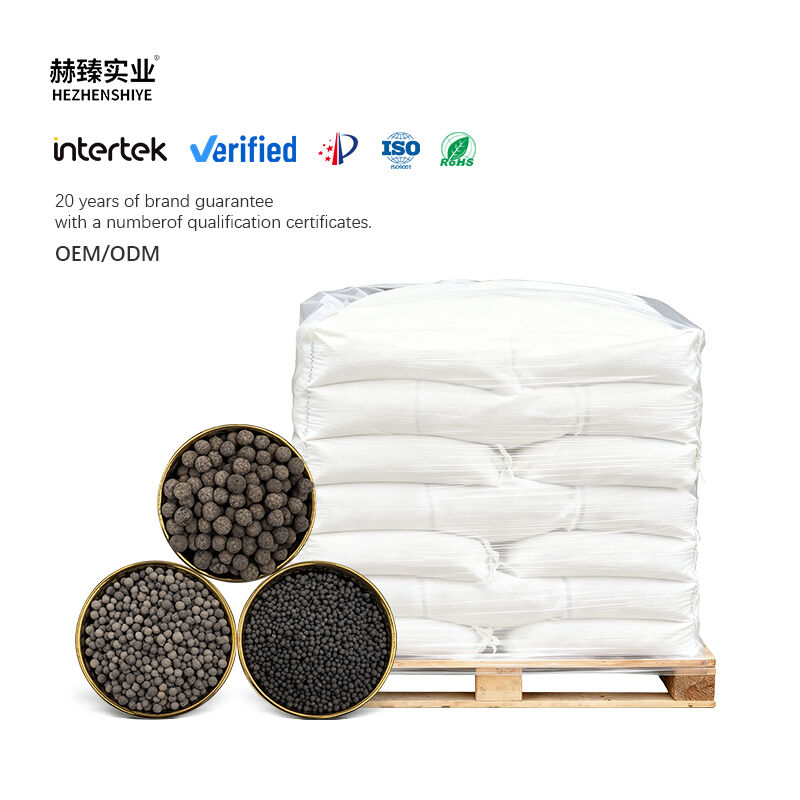
After leaving the kiln, the ceramsite fired is left to cool slowly. Rapid cooling can give rise to thermal stress and micro-cracking that influence the strength and durability of the product. As the temperature decreases, we wait and we regulate our cooling, as we wait until the glassy and crystalline phases stabilize. Such controlled cooling endows the end result in the ceramsite materials with a consistent mechanical behavior, thermal stability and weather resistance.
Quality Control and Industrial Applications
There is tight control over quality of products during the entire process of firing to make products uniform. The parameter of interest which constitutes the size distribution of the particles, bulk density, absorption and crush strength are also tested systematically. With more than 60 college degree or higher qualified engineers and employees, Hebei Hezhen possesses a full scale of testing facilities which are certified by ISO 9001 international quality system. Our ceramsites find application in the industrial industry in the form of lightweight concrete aggregates, lightweight soilless cultivation media, oil and gas drilling proppants, and filtration media.
We have a factory built in 2003 and have created a reputation of quality and professional service. Our coordination activities involve mineral processing, testing, sales, finance, warehousing and after sales through-train services in such a way that our local and foreign customers get a smooth supply experience.