EN
EN


Corn cob is a natural renewable agricultural by-product with stable organic structure, rich crude fiber content and excellent loose porous properties. After professional crushing, screening, drying and impurity removal treatment, processed corn cob granules and powder become high-quality culture medium materials widely used in the cultivation of oyster mushrooms, shiitake mushrooms, wood ear mushrooms and other common edible fungus varieties. Different from single wood chip and straw substrates, corn cob culture materials have unique physical structural advantages and balanced nutritional components, which can perfectly adapt to the growth habits and cultivation requirements of various fungus strains. With low production cost, wide source, stable batch quality and excellent cultivation adaptability, corn cob has become one of the most mainstream and cost-effective base materials in the modern edible fungus cultivation industry, helping planting factories and farmers optimize substrate formulas and improve fungus growth efficiency and yield stability.
The most prominent advantage of corn cob applied in fungus cultivation is its superior physical structural performance that optimizes the growth environment of mycelium. Processed corn cob particles have uniform granularity and natural loose porous structure, which can form a stable and breathable internal space inside the fungus bag or cultivation bed. This structure effectively solves the problems of excessive compaction and poor air permeability existing in traditional single straw and sawdust substrates. Sufficient internal air circulation provides a good oxygen supply environment for the proliferation and growth of mycelium, accelerates the full spreading and colonization of mycelium in the substrate, and shortens the overall cultivation cycle. At the same time, the porous structure of corn cob can lock and store water moderately, maintain stable internal humidity of the cultivation substrate for a long time, avoid rapid water loss and dryness of the culture medium, and prevent the mycelium from stopping growth due to water shortage, creating a constant and suitable growth environment for fungus proliferation.
Corn cob contains balanced and rich organic nutrients required for the growth of oyster mushrooms, shiitake mushrooms and wood ear mushrooms. As a pure natural organic substrate, corn cob is rich in cellulose, hemicellulose and trace mineral elements, which can provide sustained and stable nutritional supply for mycelium growth and fruiting body development. Compared with single sawdust substrate with single nutrient composition, corn cob can provide more comprehensive organic nutrients, promote thicker and denser mycelium growth, and enhance the vitality and anti-interference ability of strains during cultivation. In the whole growth stage of edible fungi, corn cob substrates can realize slow and continuous nutrient decomposition and release, avoiding the problem of insufficient nutrient supply in the later stage of cultivation. This stable nutrient supply mode effectively improves the uniformity of fungus growth, makes the fruiting time more concentrated, and greatly reduces the probability of uneven growth and delayed fruiting in large-scale batch cultivation.
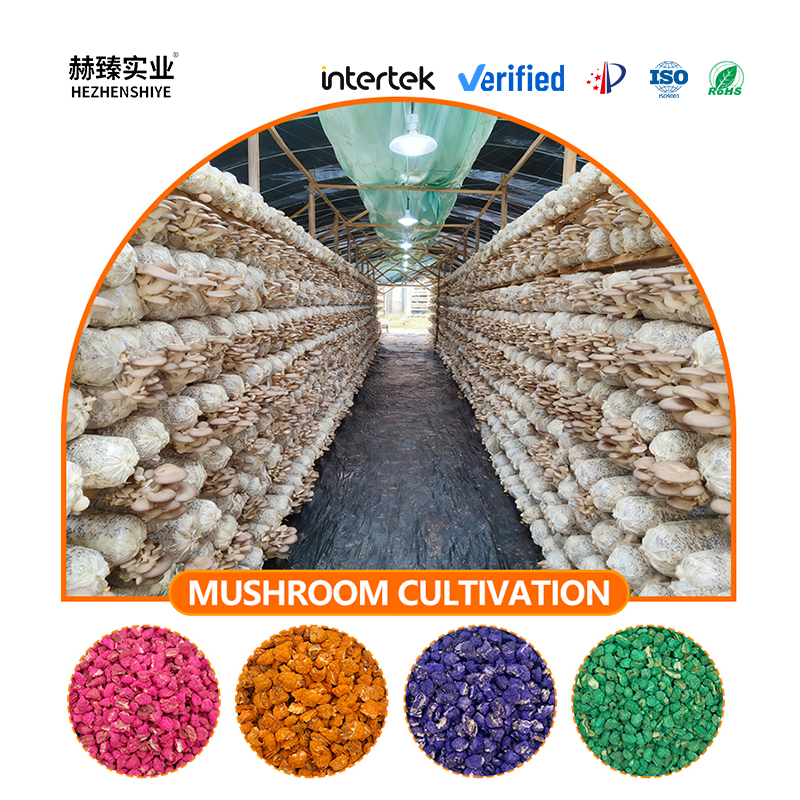
Corn cob materials have excellent compatibility with various fungus cultivation formulas and can be flexibly mixed with sawdust, cottonseed hulls, bran and other auxiliary substrates in different proportions to form a composite culture medium suitable for oyster mushrooms, shiitake mushrooms and wood ear mushrooms. Different fungus varieties have different requirements on substrate hardness, porosity and nutrient ratio. Corn cob can adjust the overall looseness, water retention and air permeability of the mixed substrate, optimize the physical and chemical state of the formula, and make the composite substrate more in line with the growth characteristics of different fungi. For high-density factory batch cultivation, the addition of corn cob can stabilize the physical structure of the substrate, prevent the culture medium from hardening and agglomerating after sterilization and long-term stacking, maintain the lasting air permeability and water retention of the fungus bag, and ensure the stable growth of mycelium in standardized industrial cultivation environments.
In terms of cultivation management and disease resistance, corn cob substrate has obvious practical advantages. The raw material of corn cob undergoes high-temperature drying and strict impurity removal treatment, with low impurity content and few harmful bacteria residues, which can effectively reduce the breeding of miscellaneous bacteria and harmful microorganisms in the substrate. Compared with some straw substrates that are easy to carry bacteria and mold, corn cob culture medium has higher stability in the sterilization and fermentation stage, lower contamination rate in the cultivation process, and can effectively reduce the loss of strain pollution in large-scale planting. In addition, the stable structure of corn cob will not decay and deteriorate in the short term during the fungus growth cycle, maintaining the structural stability of the substrate throughout the whole cultivation process, avoiding substrate collapse and poor air permeability in the later stage, and ensuring the continuous growth and stable fruiting of edible fungi.
Corn cob effectively reduces the comprehensive production cost of the edible fungus cultivation industry. As a common agricultural waste, corn cob has abundant reserves, wide sources and low procurement cost, which can replace part of high-cost sawdust and cottonseed hull raw materials. Under the premise of ensuring cultivation quality and yield, it greatly reduces the formula cost of fungus culture medium. Moreover, the processing technology of corn cob substrate is simple and mature. After simple crushing, screening and drying, it can be directly put into use without complex secondary processing procedures, saving processing time and labor cost for planting enterprises. The batch quality of processed corn cob particles is stable, with small differences between different batches, which is very suitable for standardized, large-scale and industrialized fungus cultivation production, and effectively improves the controllability and stability of planting management.