EN
EN

News
White Carbon Black: High Performance Inorganic Non-metallic Material
White carbon black, scientifically referred to as silica (SiO₂), is a premier fine chemical product that has established itself as a cornerstone material across a multitude of industries. Its unique moniker, "white carbon black," stems from its performance and application parallels to traditional carbon black, despite its stark white appearance. This article delves into the intricate details of white carbon black, exploring its physical and chemical characteristics, classification, and diverse applications.
Physical and Chemical Characteristics
White carbon black presents as a white, amorphous silicate powder, distinguished by its highly porous structure. This porosity endows it with an exceptionally large specific surface area, a critical attribute that underpins its remarkable adsorptive capabilities. The material's ability to effectively absorb moisture is unparalleled, making it invaluable in applications requiring moisture control. Chemically, white carbon black is inert, exhibiting stability under a wide range of conditions. It is insoluble in water, ensuring its performance is not compromised in aqueous environments. Additionally, its resistance to high temperatures and excellent electrical insulation properties further broaden its utility across various industrial sectors. The dispersibility of white carbon black is another key feature, facilitating its uniform distribution in matrices and enhancing the overall performance of the end product.
Classification Based on Production Methods
The production of white carbon black can be broadly categorized into two main types: fumed silica and precipitated silica, each distinguished by its manufacturing process and resultant properties.
Fumed Silica
Fumed silica, often referred to as nanometer silica due to its minute particle size, is produced through a highly sophisticated and technically demanding process. The result is a product with a purity level that can reach up to 99% and a particle size ranging from 10 to 20 nanometers. This nanoscale dimension, coupled with its high purity, confers fumed silica with exceptional properties. Its fine particle size ensures excellent dispersibility, making it an ideal reinforcing agent for silicone rubber, where it enhances the material's mechanical strength and durability. In coatings and unsaturated resins, fumed silica acts as a thickener, improving the viscosity and flow properties of the formulations. As a matting agent in coatings, it reduces gloss, providing a desired matte finish. Furthermore, its use as an opening agent for plastic films facilitates the easy separation of stacked films, enhancing processing efficiency.
Precipitated Silica
In contrast, precipitated silica is produced through a relatively simpler and more cost-effective process. The primary raw material for precipitated silica is water glass, which undergoes a series of chemical reactions to yield the final product. The production process is less technically demanding, making it easier to scale up for large-volume production. Precipitated silica finds widespread application as a reinforcing agent in both natural and synthetic rubbers, where it improves the rubber's tensile strength, tear resistance, and abrasion resistance. Additionally, it serves as a friction agent in toothpaste, contributing to the effective removal of plaque and stains from teeth.
Classification Based on Surface Properties
White carbon black can also be classified based on its surface properties, namely hydrophilic and hydrophobic silica. This classification is pivotal as it dictates the material's compatibility and performance in different environments.
Hydrophilic Silica
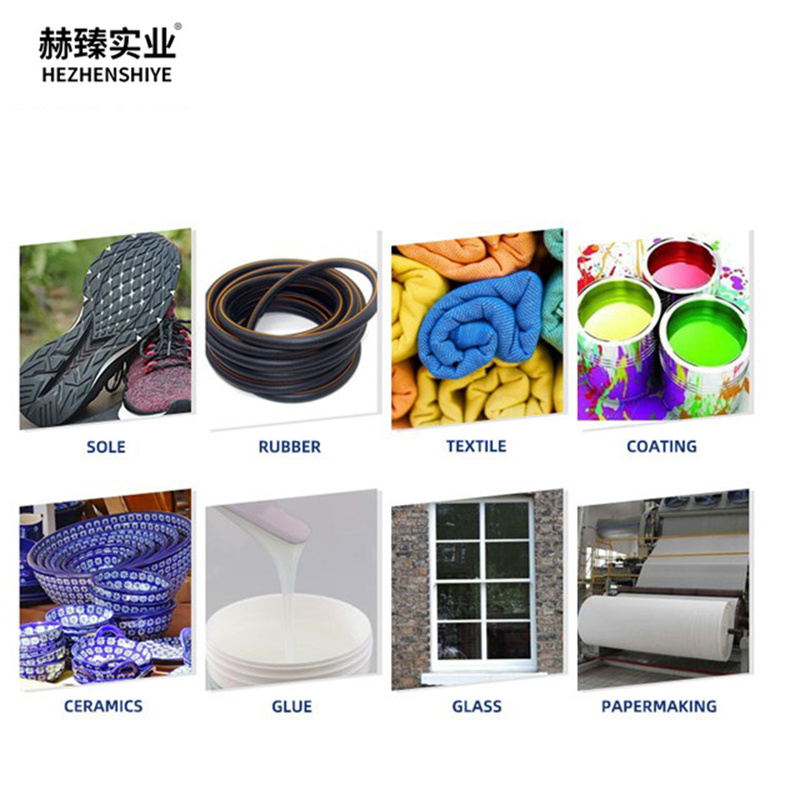
Hydrophilic silica is characterized by its excellent affinity for water and polar systems. This property makes it highly dispersible in aqueous solutions and polar solvents, facilitating its use in a variety of applications. In the food industry, hydrophilic silica acts as an anti-caking agent, preventing the clumping of powdered ingredients and ensuring the free flow of products. It is also widely used in water-based coatings, where it improves the coating's rheological properties and enhances its adhesion to substrates. As a toothpaste friction agent, hydrophilic silica provides effective cleaning without causing damage to the enamel. In the paper industry, it serves as a filler, improving the paper's strength, brightness, and printability.
Hydrophobic Silica
Hydrophobic silica, on the other hand, exhibits excellent water repellency and compatibility with nonpolar systems. This property is achieved through surface modification, which renders the silica particles hydrophobic. Hydrophobic silica is extensively used in silicone rubber reinforcement, where it enhances the rubber's resistance to water and other environmental factors. In the ink industry, it improves the ink's flow properties and printability, ensuring high-quality prints. The cosmetics industry also benefits from hydrophobic silica, utilizing it in formulations such as foundations and powders, where it provides a smooth, matte finish and controls oiliness. Furthermore, hydrophobic silica finds applications in polymer composite materials, where it improves the mechanical properties and durability of the composites.
Practical Applications and Benefits
The immense specific surface area of white carbon black is a double-edged sword, conferring both benefits and challenges. On the one hand, it enhances the material's adsorptive properties, making it effective in moisture control and preventing powder products from caking. This ensures the long-term effectiveness and stability of products, reducing waste and improving customer satisfaction. On the other hand, the high surface area can lead to increased viscosity and processing difficulties in some applications. However, these challenges are often mitigated through careful formulation and processing techniques.
The versatility of white carbon black is further exemplified by its use in emerging technologies. In the field of nanotechnology, white carbon black serves as a template for the synthesis of nanomaterials, enabling the creation of structures with unique properties. In environmental applications, it is used as an adsorbent for the removal of pollutants from water and air, contributing to a cleaner and more sustainable environment. Additionally, the development of new surface modification techniques is expanding the range of applications for white carbon black, particularly in the fields of biomedicine and drug delivery.
Conclusion
White carbon black stands out as a high-performance inorganic non-metallic material with a diverse range of applications. Its unique physical and chemical properties, coupled with its classification based on production methods and surface properties, make it a valuable asset in numerous industrial processes. From traditional applications in rubber and coatings to emerging technologies in nanotechnology and environmental remediation, white carbon black continues to drive innovation and efficiency. As research and development efforts progress, the potential applications of white carbon black are expected to expand further, solidifying its position as a key material in the global market. Its ability to enhance product performance, improve processing efficiency, and contribute to sustainability makes it an indispensable component in the quest for a better future.
| manufacturing technique | characteristic | use |
| Fumed silica | The production process has high technical threshold and complicated process, and its particle size reaches nanometer level, commonly known as "nanometer silica". Its core advantages are high purity (up to 99%), fine particle size (10-20nm) and excellent dispersibility. | Silicone rubber reinforcing agent Coating/Unsaturated Resin Additives Plastic film opening agent |
| Precipitated silica | The production process is relatively simple, the difficulty of large-scale production is low, and the core raw material is water glass, so the cost is more advantageous. | Rubber reinforcing agent Toothpaste friction agent |
| Surface property | characteristic | use |
| Hydrophilic silica | It has good hydrophilicity and dispersion of polar system. | Toothpaste friction agent Food industry Coating and paper industry |
| Hydrophobic silica | Excellent hydrophobicity and nonpolar system compatibility. | Silicone rubber industry Ink industry Cosmetics industry Field of polymer composite materials |