EN
EN
News
Recycled Rubber Granules Practical Recycled Material with Reliable Performance & Diversified Uses
Time : 2026-06-09
As a typical recycled new material in circular economy industry, rubber granules are manufactured by reprocessing waste rubber resources. Using abandoned tires, industrial rubber parts and leftover rubber materials as raw materials, the finished products combine good elasticity, sturdiness and environmental friendliness. After professional crushing, screening, purification and modification, rubber granules of different particle sizes are widely used in sports facilities, traffic construction, landscape engineering, industrial shock absorption and daily rubber products. With reasonable price and stable quality, it has become a preferred material for engineering contractors and product manufacturers around the world, and also makes great contributions to waste rubber disposal and ecological environmental protection.
1. Raw Material Standards & Complete Production Technology
To guarantee consistent product quality, we implement strict control over raw material sources. We select intact waste rubber with complete rubber texture, and eliminate materials that have been severely corroded or mixed with large amounts of impurities. The production line adopts mature physical recycling technology, which is eco-friendly and highly efficient.
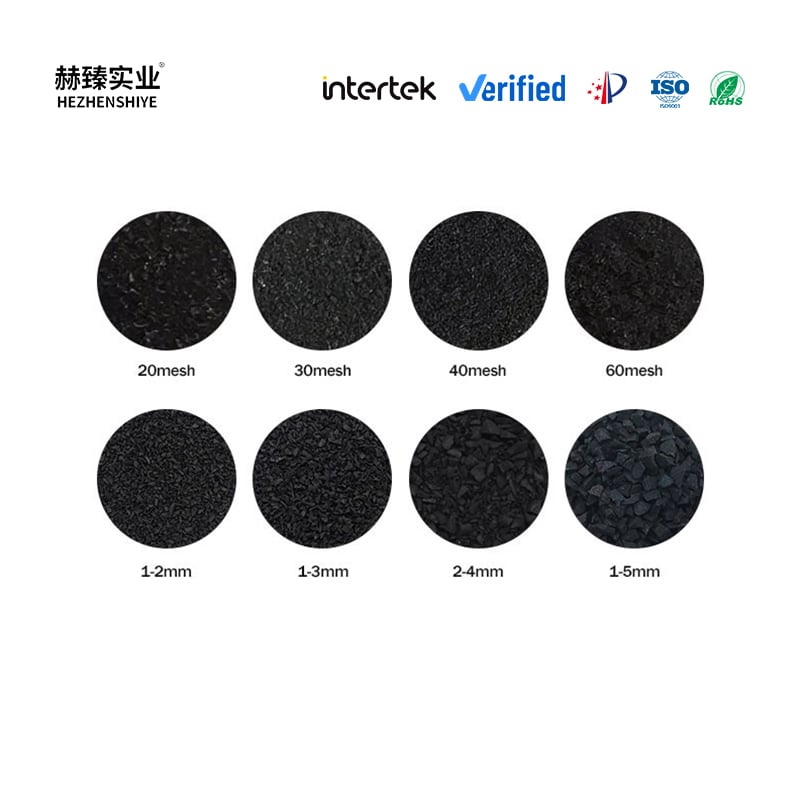
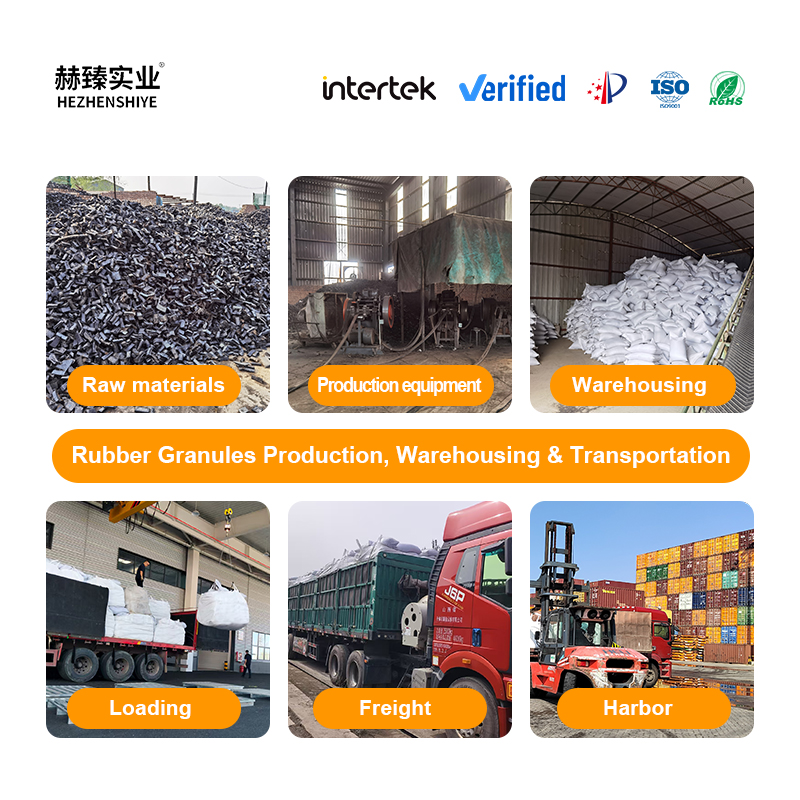
The production flow is divided into six core steps. First, comprehensive sorting and impurity removal: professional equipment removes steel wires, fabric threads, sand and other impurities mixed in raw rubber to ensure the purity of granules. Second, coarse crushing and fine grinding: large rubber pieces are processed into small particles of uniform size via multi-stage grinding equipment. Third, precision screening and classification: according to customer requirements, we classify products into different particle sizes, including common specifications 1–3mm, 2–4mm and customized mesh products. Fourth, desulfurization and performance optimization: moderate low-temperature desulfurization treatment restores the original flexibility of rubber and upgrades overall performance. Fifth, drying treatment: remove internal moisture to avoid mildew during storage and transportation. Sixth, automatic packaging: finished products are packed into standard woven bags with 25kg net weight, or transported in bulk for large orders. The whole production process is clean and will not bring extra pollution to the environment.
2. Core Performance & Product Advantages
A full set of superior properties makes rubber granules stand out among similar filling and elastic materials. First of all, strong shock absorption and buffer performance can relieve impact force effectively, which is very suitable for places requiring soft protection. Second, excellent wear resistance and weather resistance enable the material to adapt to all kinds of outdoor harsh environments. It will not wear thin, crack or lose elasticity after years of use. Third, excellent anti-slip property: the irregular granular surface increases friction force, effectively preventing slipping on wet ground and ensuring personal safety.
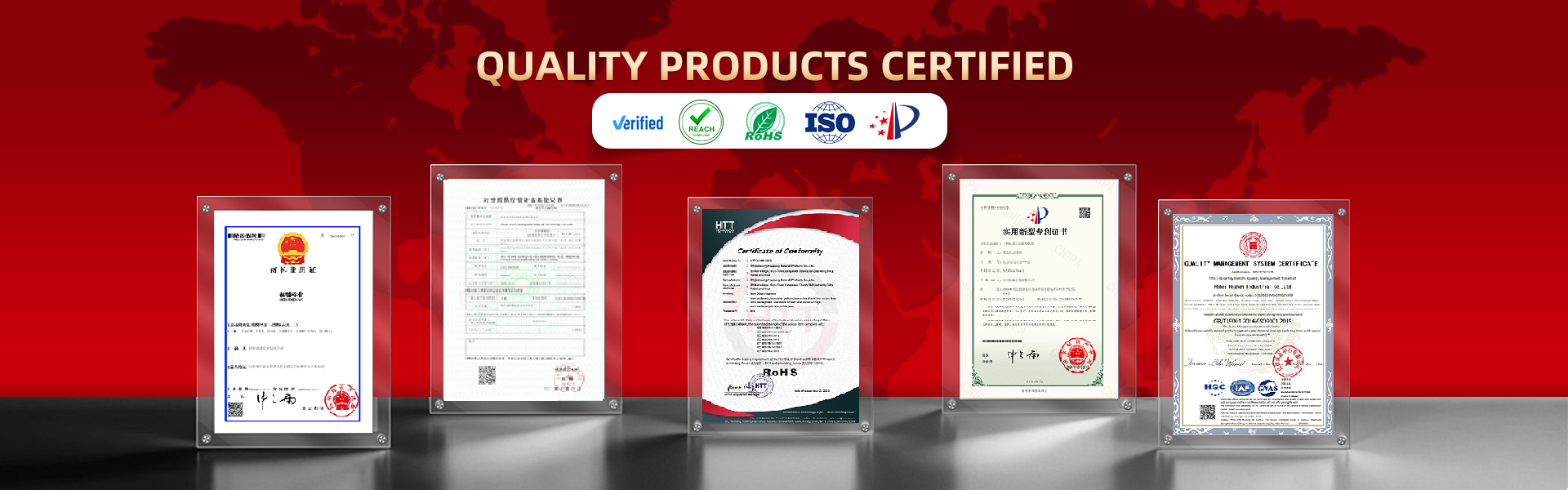
Moreover, the material is completely safe and eco-friendly. Tested by authoritative institutions, it contains no toxic ingredients or heavy metals, has no pungent smell, and can be safely used in public areas such as schools, kindergartens and community parks. It features water-proof, mildew-proof and acid-base resistant properties, so the service life is far longer than many traditional materials, and later maintenance work is almost unnecessary. Custom color service is available; color-fast eco colorants are added during production, so the color remains vivid for a long time without fading, meeting diverse aesthetic and matching demands of different projects.
3. Classification of Application Scenarios
- Sports Facilities: This is the most mainstream application field. Rubber granules are widely laid on synthetic running tracks, various ball game courts and children’s activity areas. As elastic buffer materials, they create comfortable and safe sports environments and fully comply with global environmental protection codes for sports venues.
- Rubber Mats & Floor Products: Processed into various anti-slip mats, shock-absorbing floor tiles for workshops, parking lots and stairways. With sound insulation and wear-resistant features, these products adapt to high-frequency use in indoor and outdoor spaces.
- Road & Building Materials: Added into asphalt to produce modified pavement materials, enhancing road crack resistance and noise reduction effect. It is also used for building waterproof layers, thermal insulation and sound insulation components to improve material toughness and anti-aging ability.
- Landscape & Greening Projects: Applied to garden walkways, tree protection zones and rooftop greening drainage layers. It can conserve water, ventilate soil and inhibit weed growth, serving as an ideal replacement for traditional sand and gravel.
- Industrial Rubber Parts: Used as raw materials to produce rubber pipes, damping blocks, foot pads and sealing components, helping manufacturers cut raw material cost while keeping good product performance.
- Rail Transit & Vibration Damping: Applied to vibration damping layers and buffer parts for railways and bridges, absorbing vibration and noise to improve the stability of operation.
4. Social Value & Industry Development Trend
The massive output of waste rubber has long been a difficult environmental problem. Rubber granule recycling realizes harmless disposal and resource reuse of waste rubber, reduces black pollution, saves non-renewable petroleum resources and lowers carbon emission. Compared with brand-new rubber materials, recycled rubber granules have obvious price advantages and stable performance, so it gains strong support from environmental policies in all regions.
In recent years, as environmental regulations become stricter, sports infrastructure construction and urban greening projects develop rapidly, market demand keeps growing. The industry presents three clear development directions: high-end performance upgrading, full standardization of product indicators, and multi-functional innovation. More new products with flame retardant, antibacterial and super weather-resistant functions are continuously launched.
In conclusion, recycled rubber granules are a practical and valuable green recycled material. With multiple strengths of environmental protection, safety, durability and economy, it has covered numerous industrial and civil fields. Under the general trend of global green and low-carbon development, rubber granule industry will embrace broader development space and keep contributing to the construction of circular economy.