EN
EN

News
Coconut Coir Brick Uses and Benefits for Gardening
Time : 2026-07-07
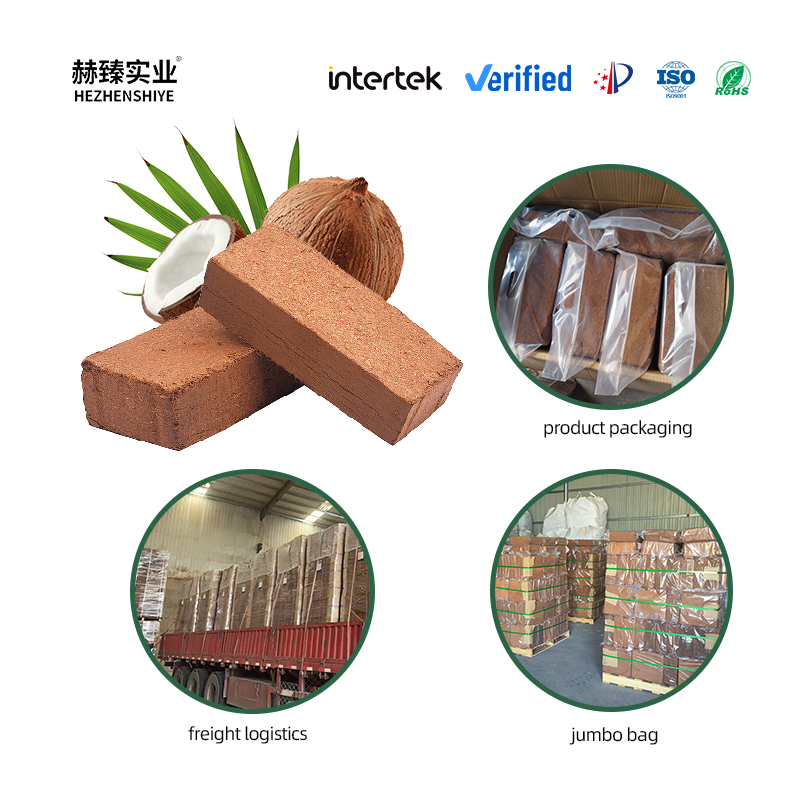
Coconut coir brick, also known as coco peat brick, is a compressed growing medium made from natural coconut fiber. It is clean, lightweight, porous, and environmentally friendly, making it one of the most popular universal soil materials for home gardening, potted plants, vegetable planting, and seedling cultivation. Unlike ordinary garden soil, coir brick contains no weed seeds, insect eggs, hard soil clumps, or harmful impurities. It does not harden easily after long-term use and provides a soft and breathable growth environment for all kinds of plants. Suitable for beginners and professional gardeners, it greatly improves plant survival rate and growth condition with simple operation and high cost performance.
The biggest advantage of coconut coir brick is improving soil structure and solving soil compaction problems. Common garden soil and regular nutrient soil tend to become hard and dense after repeated watering. When the soil hardens, water cannot penetrate evenly, air cannot circulate freely, plant roots cannot stretch smoothly, and plants are prone to yellow leaves, slow growth, root suffocation and root rot. After soaking and expanding, coir soil becomes fluffy and porous. Mixed with ordinary soil, it can effectively loosen hard soil, increase air permeability and drainage performance, keep the soil soft for a long time, and create a comfortable breathing environment for plant roots.
Coconut coir brick has excellent water retention and moisture retention effects. The unique fiber structure of coconut coir can absorb and store a large amount of water and slowly release water and moisture according to the growth needs of plants. It effectively avoids the problems of rapid soil drying and frequent watering. At the same time, it will not cause water accumulation and root rot caused by excessive watering. This stable humid environment is very suitable for potted flowers, green plants and vegetables, greatly reducing the maintenance difficulty, especially suitable for families who do not have much time to take care of plants every day.
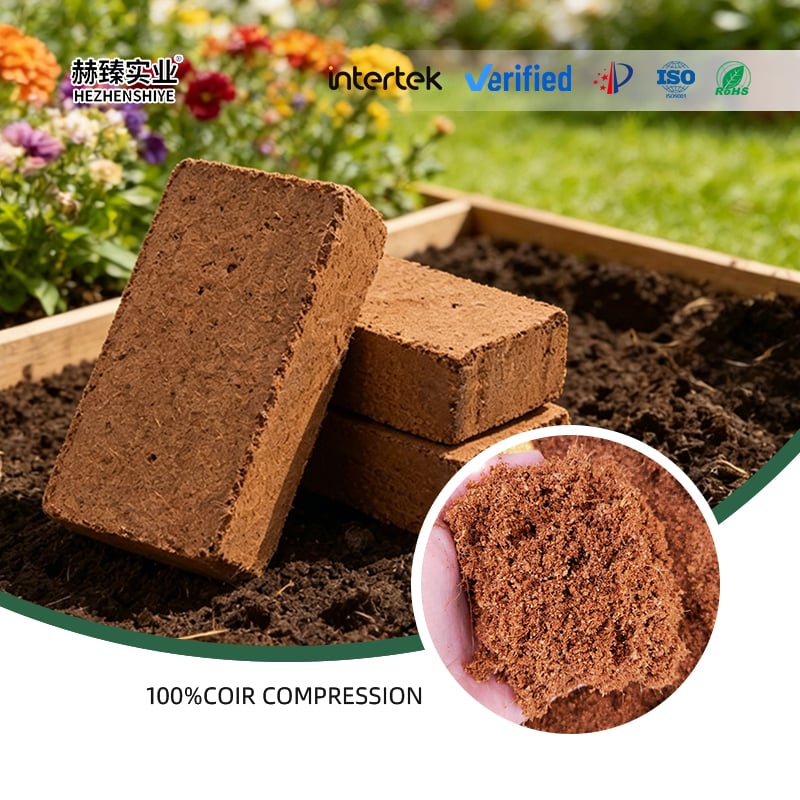
It is an ideal medium for seed sowing and seedling raising. Coir soil is fine, clean and sterile, without impurities, weeds or pests. When sowing flower seeds and vegetable seeds or cultivating small seedlings, pure expanded coir soil can provide a soft and clean germination environment. The loose texture allows young roots to take root easily, helps seeds germinate faster and improves the overall germination rate. During seedling transplanting, the coir soil layer can protect the tender root system, reduce root damage, and make seedlings adapt to new pots and soil faster with higher survival rate.
Coconut coir brick is widely applicable for various potted flowers and indoor green plants. It works perfectly for common household plants such as pothos, spider plant, monstera, fortune tree, succulents, roses, gardenias and orchids. For foliage plants that like moist and breathable soil, coir can be mixed with nutrient soil to improve softness and air permeability. For succulents and orchids that fear water accumulation, coir can be matched with granular soil to enhance drainage and effectively prevent root rot. In addition, coir soil is light and dust-free, which will not dirty the indoor environment, very suitable for balcony and indoor gardening decoration.
It is also very suitable for balcony vegetable planting and family vegetable gardening. Potted tomatoes, peppers, lettuce, spinach, chives, coriander and other common vegetables all need loose, breathable and water-retentive soil. Mixing coir soil with ordinary garden soil and organic fertilizer can significantly improve soil quality, promote rapid rooting and vigorous growth of vegetable seedlings, make leaves greener and healthier, and increase vegetable yield. Coir soil has no peculiar smell and is not easy to breed small insects and mold, ensuring a clean and hygienic planting environment for indoor and balcony vegetable planting.
In addition to daily planting, coconut coir brick has multiple auxiliary gardening functions. It can be used for plant repotting and soil replacement to fill the gaps around the root system, protect plant roots and help plants recover quickly after repotting. It is also an excellent medium for plant cutting propagation. The breathable and moisturizing properties of coir create a stable rooting environment for cuttings, improve the success rate of cutting, and reduce branch withering and rooting failure. Besides, clean coir soil can be used for micro landscape making and pet bedding laying due to its sterile and soft features.
The usage of coir brick is extremely simple. Just soak the whole brick in clean water, and it will fully expand and turn into fluffy coir soil after absorbing water. Squeeze out excess water before use. It can be used purely or mixed with other soil and fertilizers. It should be noted that coir soil is excellent in air permeability and water retention, but it contains low natural nutrients. Matching with slow-release fertilizer or organic fertilizer can provide sufficient nutrition for plant growth and make plants grow more lush and healthy.
In summary, coconut coir brick is a versatile and essential gardening material with the advantages of being clean, light, fluffy, breathable, water-retentive and non-hardening. It solves most common gardening problems including hard soil, poor drainage, root rot, weed growth and low seedling survival rate. Whether for novice home gardening, professional plant maintenance, balcony vegetable planting or seedling and cutting propagation, coir brick is a practical, cost-effective and reliable choice for all kinds of plant planting scenarios.