EN
EN

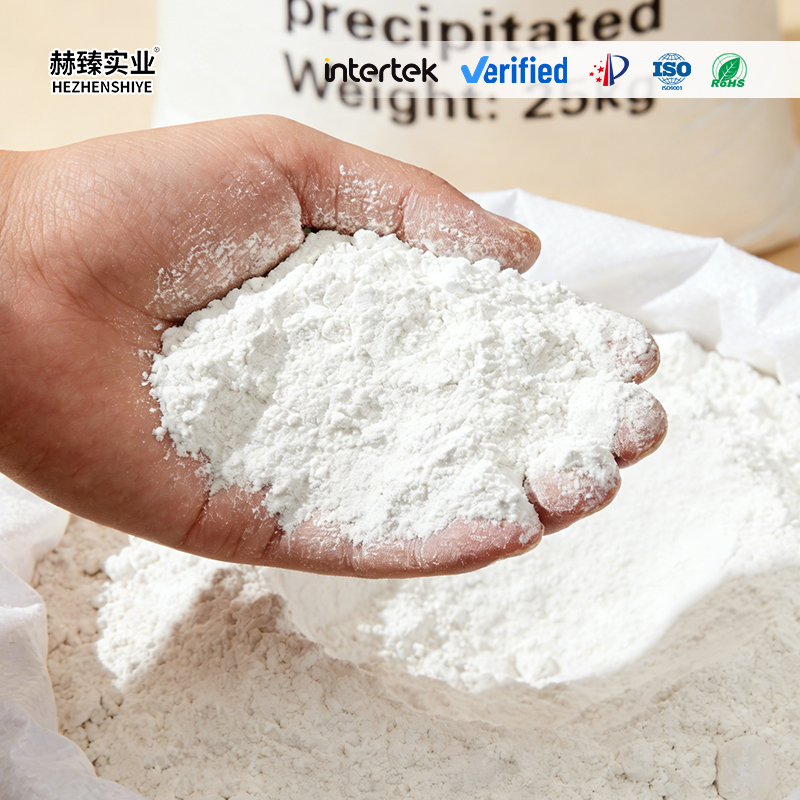
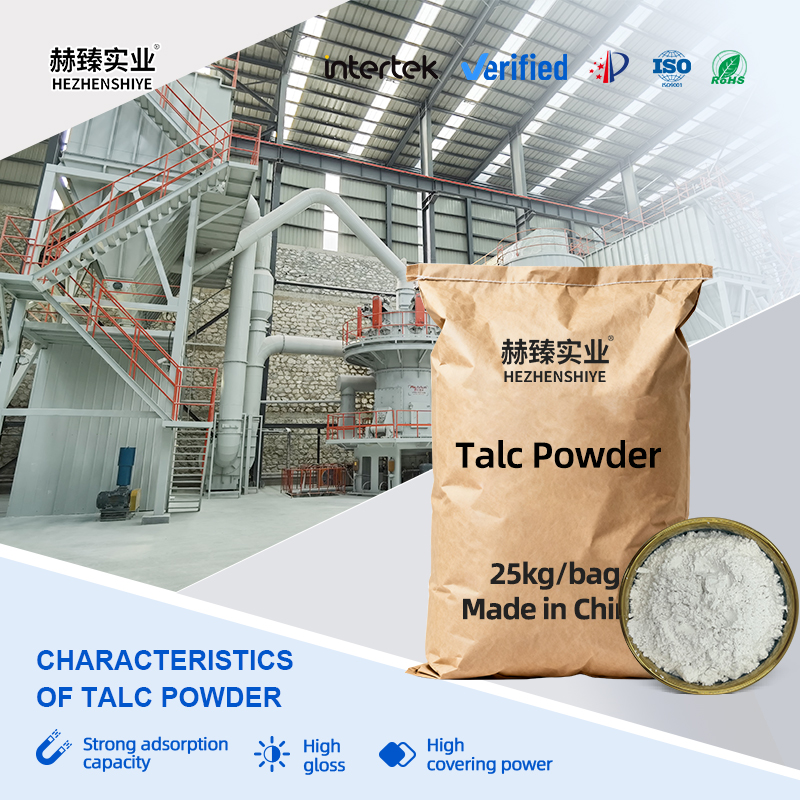
Talc powder is a soft hydrated magnesium silicate mineral powder processed from natural talc ore, featuring layered flaky crystal structure, ultra-low hardness, outstanding lubricity, high whiteness and chemical inertness. It is known as the softest industrial mineral filler. With excellent slip resistance, heat resistance, insulation and filling properties, it is a widely used cost-effective non-metallic mineral raw material, with irreplaceable application advantages in plastics, coatings, rubber, papermaking, ceramics and cosmetics industries worldwide.
1. Formation & Production of Talc Powder
Natural talc ore is formed by hydrothermal metamorphism of magnesium-rich rock masses over millions of years. Raw talc contains impurities such as serpentine, dolomite, quartz and chlorite. Finished talc powder goes through selective mining, crushing, washing purification, magnetic iron removal, ultra-fine grinding, air classification and surface modification. The layered crystal structure is fully retained after processing, with uniform particle size, high whiteness and stable quality. Multiple mesh specifications from 200 mesh to 3000 mesh can be customized for different industrial demands.
2. Key Characteristics of Talc Powder
- Unique Flaky Layer Structure & Superior Lubricity: Thin sheet crystals bring excellent smoothness and slip property, effectively improving product surface gloss and processing fluidity.
- High Heat Resistance & Thermal Insulation: Stable at temperatures below 900℃, low thermal conductivity, good heat insulation and anti-scorch performance during high-temperature processing.
- Excellent Electrical Insulation: High resistivity, low dielectric loss, suitable for electronic and insulating plastic products.
- Stable Chemical Inertness: Insoluble in water, resistant to weak acid and weak alkali, no chemical reaction with most resins, pigments and additives.
- High Whiteness & Good Filling Performance: High brightness, low oil absorption, can reduce raw material cost and enhance product dimensional stability.
- Soft Texture & Safe to Use: Low hardness, no abrasion to production equipment; high-purity cosmetic grade talc meets skin contact safety standards.
3. Main Application Fields of Talc Powder
3.1 Plastic Industry (Core Application)
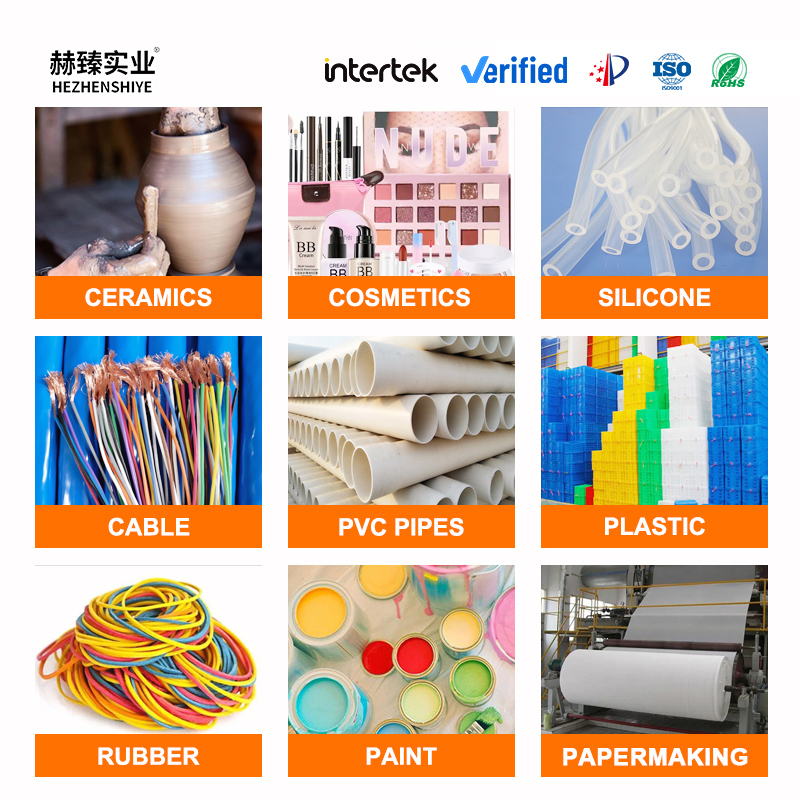
Used as functional filler for PP, PE, PVC, ABS and engineering plastics. It improves product rigidity, heat distortion temperature, dimensional stability and surface smoothness, reduces shrinkage and warpage, widely used in auto parts, household appliances and plastic sheets.
3.2 Coatings & Paints Industry
Serves as anti-settling agent, matting agent and anti-rust filler in architectural coatings, industrial paints and anti-corrosion coatings. It enhances coating leveling, weather resistance and scrub resistance, avoids paint sagging and improves surface delicate texture.
3.3 Paper Making Industry
Applied as filler and coating raw material for high-grade cultural paper and coated paper. It improves paper smoothness, opacity and printability, reduces pulp consumption and lowers production costs.
3.4 Rubber Industry
Added to rubber products such as tires, sealing strips and rubber sheets to improve processing lubricity, anti-aging performance and surface smoothness, prevent rubber from sticking to molds during production.
3.5 Ceramics Industry
Used in ceramic blanks and glazes to reduce firing temperature, improve glaze smoothness, prevent product cracking, widely used in daily ceramics and architectural tiles.
3.6 Cosmetics & Daily Chemicals
High-purity talc powder is the core raw material for loose powder, foundation, body powder and facial masks. It absorbs skin excess oil, creates silky smooth texture and improves product ductility.
3.7 Other Industries
Also used in cable insulation materials, waterproof materials, agricultural pesticides carrier and polishing agents.
4. Standards for High-Quality Talc Powder Selection
- High Whiteness & Low Impurity: Low iron, calcium carbonate and quartz content to ensure high whiteness without discoloration after high temperature.
- Complete Flaky Crystal Form: Well-preserved layered structure to guarantee lubrication and reinforcing effect.
- Uniform Particle Fineness: Narrow particle distribution, good dispersion, no agglomeration.
- Low Heavy Metal Content: Cosmetic and food contact grades comply with international safety testing standards.
- Stable Thermal Performance: No decomposition or discoloration under conventional processing temperature.
- Complete Certification: Adopt iron removal and purification process, equipped with ISO and relevant industry qualification certificates.
5. Comparison with Kaolin, Calcium Carbonate & Wollastonite
Talc powder stands out in lubricity, smoothness and heat insulation, far better than calcium carbonate and wollastonite in plastic slip aid and coating leveling performance. Kaolin has superior plasticity and bonding force; wollastonite owns stronger reinforcement and rigidity; calcium carbonate has higher cost performance. Talc powder is the first choice for high-gloss plastics, high-grade coatings, printing paper and cosmetic raw materials.
Conclusion
Talc powder is a classic multi-functional mineral filler integrating lubrication, heat resistance, insulation and filling performance. It deeply participates in plastic, coating, papermaking, ceramic and cosmetic manufacturing, occupying an important position in the global industrial mineral market.
We supply various grades of talc powder including plastic grade, coating grade, paper grade, ceramic grade and cosmetic grade. Customized fineness, surface modification and free samples are available. With stable mineral supply, strict quality control and professional export service, we look forward to establishing long-term partnership with global buyers to achieve joint development.