EN
EN

Introduction
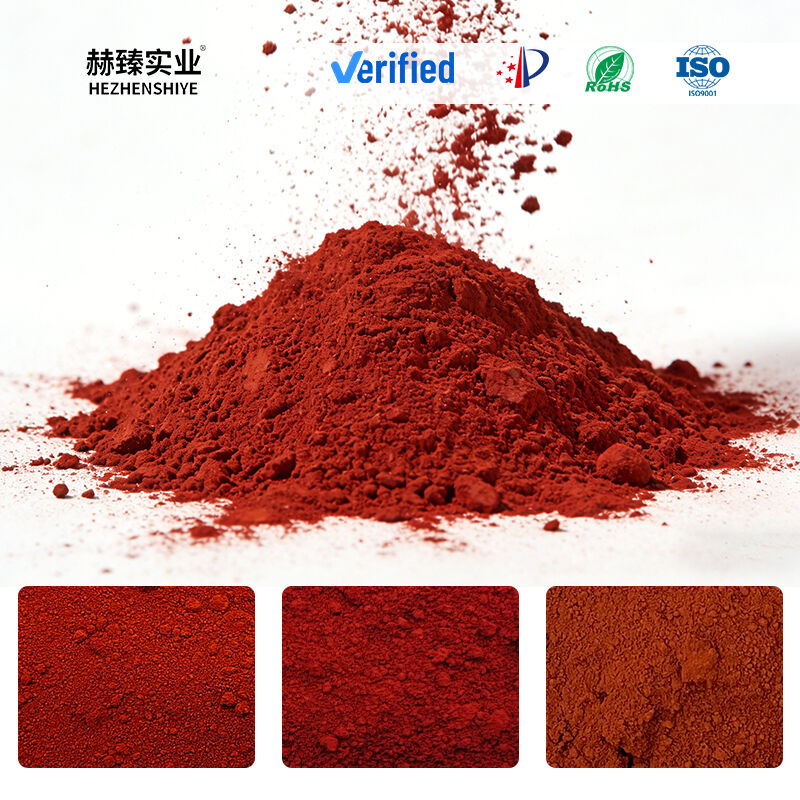
Iron oxide pigment is a kind of inorganic color pigment dominated by iron oxides such as Fe₂O₃, Fe₃O₄ and FeOOH, mainly including iron oxide red, iron oxide yellow, iron oxide black, iron oxide brown and other series. It is famous for its excellent light resistance, weather resistance, high temperature resistance, strong covering power, non-toxic and environmental protection. As an indispensable high-efficiency colorant in industrial production, it has irreplaceable application value in coatings, construction materials, plastics, rubber, ceramics, cosmetics and other fields.
1. Formation & Production of Iron Oxide Pigment
Natural iron oxide pigment is derived from hematite, magnetite and other iron ore deposits. At present, most industrial-grade high-quality iron oxide pigments are prepared by chemical synthesis, including nitric acid method, sulfuric acid method, ammonia method and high-temperature calcination process.Through strict reaction control, filtration, washing, drying, ultra-fine grinding and surface modification, impurities are removed to ensure uniform particle size, stable color phase and excellent dispersion. The processed iron oxide pigment presents pure color, strong tinting strength, no color migration and no fading, and is suitable for various industrial coloring systems.
2. Key Characteristics of Iron Oxide Pigment
- Excellent Light & Weather Resistance: Stable under strong ultraviolet irradiation, no fading after long-term outdoor exposure, weather resistance up to international high grade, suitable for long-term use in outdoor facilities.
- High Temperature Resistance: Good thermal stability within the conventional process temperature range; iron oxide red can withstand high temperature above 300℃, and maintains stable color during firing and high-temperature processing without discoloration.
- Strong Covering & Tinting Power: Small dosage can achieve ideal coloring effect, effectively cover the substrate background color, reduce the amount of pigment used and save production cost.
- Outstanding Chemical Stability: Insoluble in water and alkaline substances, stable to cement, lime and other building materials, resistant to general weak acids and organic solvents, no reaction with most media.
- Non-toxic & Environmentally Friendly: Free of heavy metals such as lead, cadmium and chromium, low heavy metal residue, compliant with environmental protection and cosmetic safety standards, safe and reliable to use.
- Good Dispersion & Compatibility: Uniform particle size, easy to disperse in water-based and oil-based systems, no agglomeration, no precipitation, compatible with most resins and additives.
These excellent properties make iron oxide pigment the preferred colorant for construction, coatings, plastics and high-temperature coloring products.
3. Main Application Fields of Iron Oxide Pigment
3.1 Construction Materials Industry (Largest Core Application)
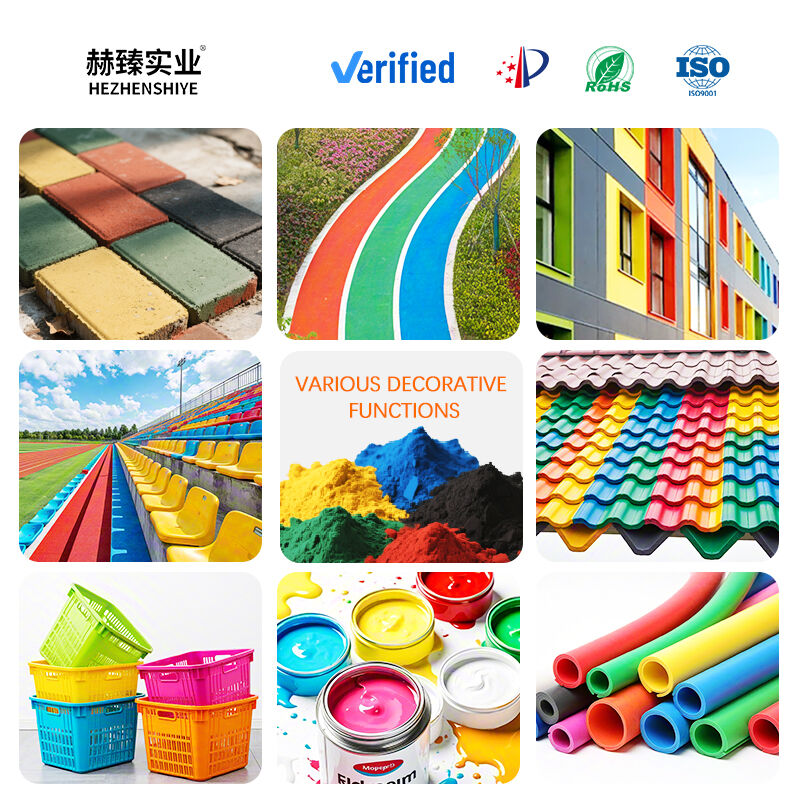
Widely used in colored concrete, colored asphalt, floor materials, artificial stone, colored bricks and tiles. It endows building materials with rich and stable colors, maintains color durability under outdoor sun and rain, and is widely used in municipal roads, landscape squares, residential buildings and industrial plants.
3.2 Coatings Industry
Used as coloring and functional filler in water-based coatings, architectural coatings, industrial coatings, anti-corrosion coatings and powder coatings. It improves coating weather resistance, scrub resistance and UV resistance, prevents color fading and powdering, and is suitable for exterior walls, automobiles, ships and anti-corrosion equipment.
3.3 Plastics & Rubber Industry
Applied to coloring of plastic products, rubber products, masterbatch and cable materials. It has good compatibility with polymer materials, no color migration, no influence on mechanical properties, and endows products with durable color, such as toys, auto parts, sealing strips and pipes.
3.4 Ceramics & Glass Industry
Used for coloring of ceramic blanks and glazes, as well as glass coloring. Stable at high firing temperature, high color reduction rate, bright color, used in ceramic tiles, sanitary ware, art ceramics and heat-absorbing glass, protective glass and other products.
3.5 Cosmetics & Daily Chemicals
Due to its safety, non-toxicity, fineness and mildness, it is used as colorant for cosmetics such as eye shadow, powder, lipstick and foundation. It has good skin adhesion, not easy to take off makeup, and complies with cosmetic safety specifications.