EN
EN

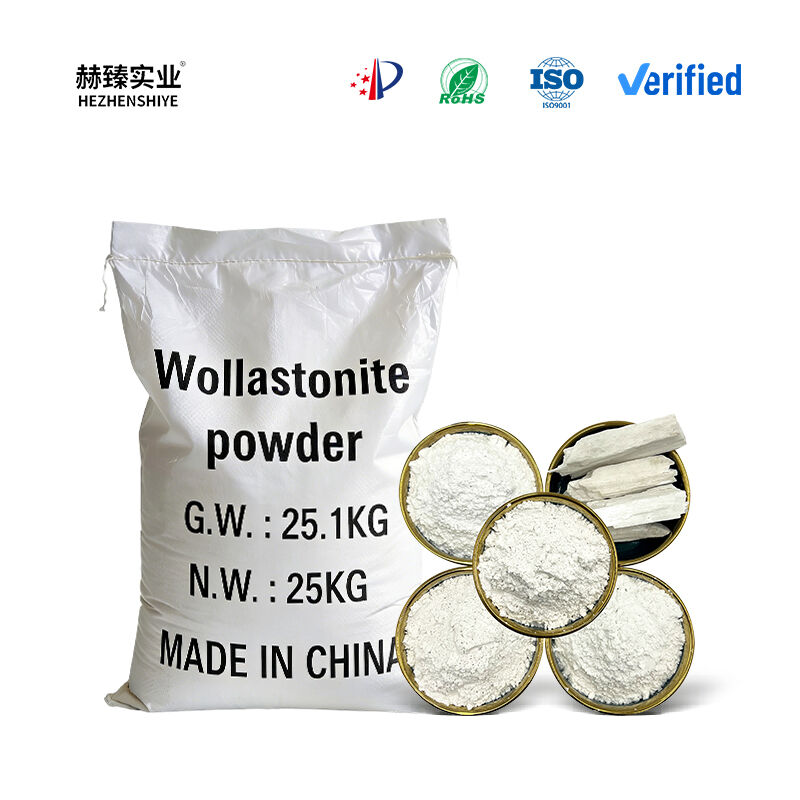
Different mesh grades of wollastonite powder fit differentiated industrial usages, making clear grade selection the key to helping customers save cost and optimize finished product quality. Main commercial specifications include 60mesh granular wollastonite, mainstream 325mesh regular powder and high-end 1250mesh/ultrafine modified wollastonite, each with targeted application fields from traditional heavy industry to advanced new material manufacturing for global downstream clients.
Ceramic industry remains the largest consumption field of wollastonite globally. In sanitary ware, daily porcelain and architectural ceramic blank & glaze production, adding proper proportion of wollastonite can lower kiln firing temperature by 100~200℃, shorten whole burning cycle and cut factory energy consumption greatly. It effectively restrains product shrinkage and deformation during high-temperature calcination, lifting ceramic whiteness, surface smoothness and finished yield rate obviously. Ceramic buyers usually pick low ignition loss grade powder to guarantee stable firing effect, while metallurgy factories prefer medium-coarse 325mesh products for continuous casting protective slag; mixed into molten steel slag, wollastonite offers thermal insulation, anti-oxidation and lubrication to stabilize casting billet quality during steel production.
Plastic and rubber sectors are fast-growing consumption markets for modified superfine wollastonite. When filled into PP, PE, PVC, ABS and nylon plastic as well as various synthetic rubber, acicular wollastonite improves finished parts’ heat resistance and anti-creep performance. It is commonly used for plastic water pipes, automotive interior components, household appliance casings and rubber sealing gaskets. As eco alternative filler replacing asbestos, wollastonite becomes core raw material for automobile brake pads and clutch plates, maintaining stable friction coefficient under high temperature with low wear and running noise, which satisfies the strict standard of global auto parts suppliers.
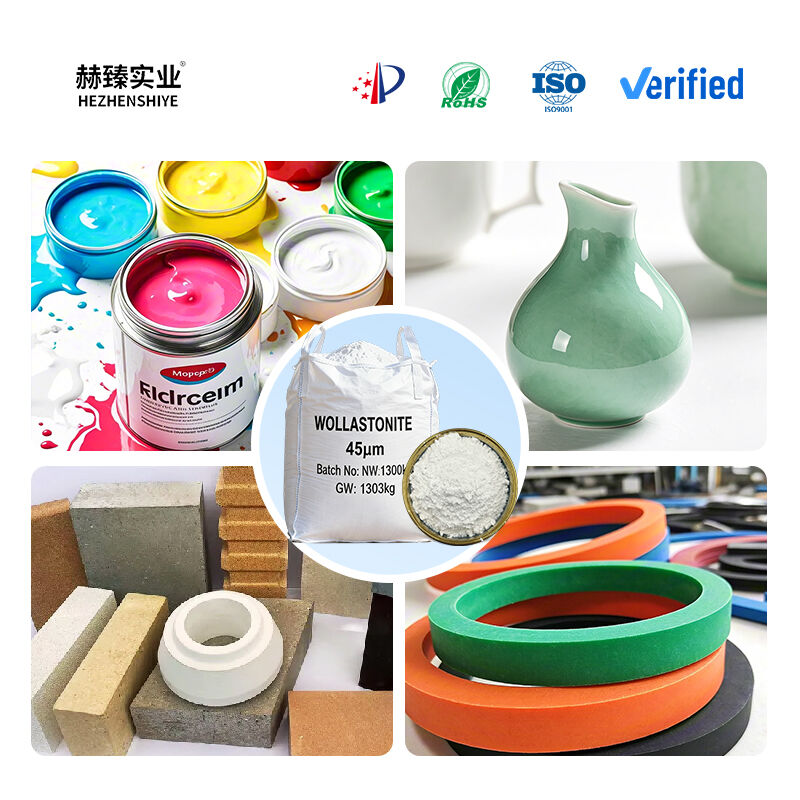
In water-based paint, anti-corrosion coating and powder coating production, wollastonite works as economical extender pigment. Proper addition from 5% to 30% improves coating scrub resistance, anti-cracking ability and outdoor weather durability. Low oil absorption characteristic helps paint producers increase solid content and reduce dependence on expensive white pigment, achieving obvious cost control. Construction industry applies wollastonite into thermal insulation mortar, wall boards and calcium silicate boards to enhance fireproof, sound insulation and compression performance of building products. Meanwhile, papermaking factories use superfine wollastonite as paper filler and coating material to upgrade paper opacity, whiteness and printing performance while decreasing natural wood pulp consumption.
From cost comparison perspective, customers can reasonably select substitute materials according to production needs for cost optimization: general low-grade waterproof mortar and ordinary interior paint can partially use ground calcium carbonate to replace wollastonite; products requiring high silicon content can choose talc as alternative filler. But high-end products including top-grade exterior paint, precision plastic parts and high-grade ceramic glaze cannot replace wollastonite arbitrarily, as no other cheap filler can replicate its unique needle-shaped reinforcing function.
Looking ahead the global market, three major development directions dominate wollastonite industry: high-end ultrafine modification, green clean production and multi-functional development. Global market annual growth rate stays around 8%~12%, and Chinese domestic market growth exceeds global average speed. With stricter worldwide environmental laws phasing out asbestos and harmful fillers, demand for non-toxic green wollastonite will keep steady growth in new energy, bioceramic and electronic material fields, bringing long-term stable market prospects for both suppliers and purchasing manufacturers across the world.