EN
EN

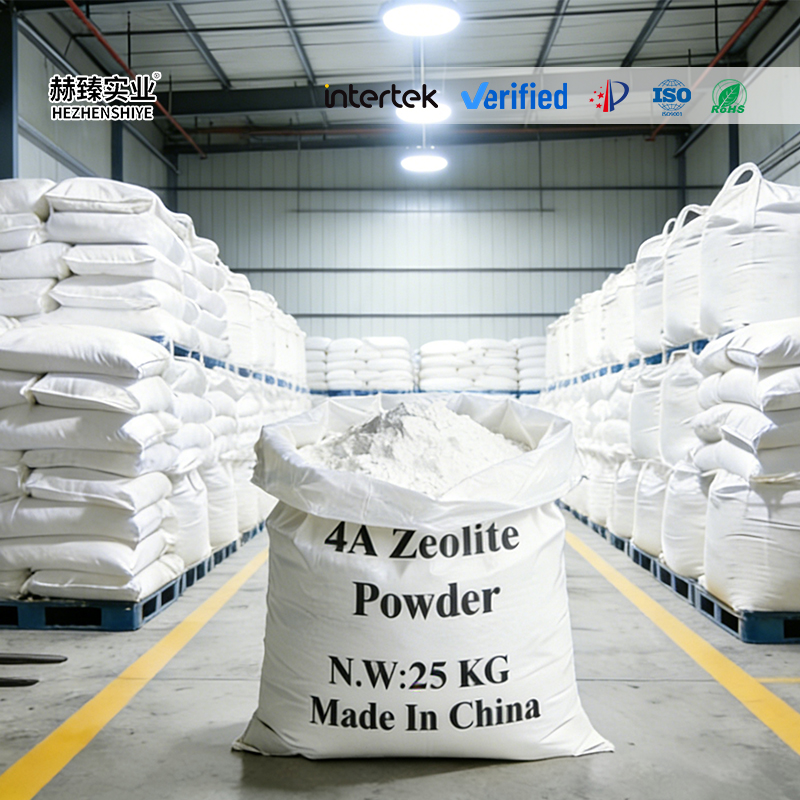
4A zeolite powder is a synthetic Type A molecular sieve powder with the chemical formula Na₁₂[(AlO₂)₁₂(SiO₂)₁₂]·27H₂O. It derives its name from the internal crystal micropores measuring approximately 0.42 nm (4 Å). This white, fine ultra-fine inorganic powder exhibits a well-defined three-dimensional cage-like pore structure, endowing it with key properties such as strong ion exchange capacity, selective adsorption capability, catalytic support function, safety, non-toxicity, and environmental friendliness due to its phosphorus-free composition. It serves as a core raw material for phosphorus-free detergent additives worldwide and finds applications across various industrial sectors including environmental water treatment, rubber and plastic fillers, agricultural and livestock production, chemical desiccants, and building materials and coatings. Amid the growing emphasis on phosphorus reduction and sustainable manufacturing practices, it has become an indispensable multifunctional industrial powder material.
Ⅰ. Microstructure and Key Physicochemical Properties: 4A Zeolite exhibits a three-dimensional network pore structure in the cubic crystal system, formed by alternating silicon-oxygen tetrahedrons and aluminum-oxygen tetrahedrons. Its uniform micropores constitute the fundamental basis for its functionality, while its highly standardized physicochemical parameters serve as critical criteria for product grading in the industry.
Particle size characteristics: Pure white fluid powder with a whiteness of ≥95% for high-quality products, average particle size ranging from 2 to 4 μm, where fines below 4 μm account for over 85%. The powder exhibits excellent dispersibility and resistance to agglomeration, making it suitable for various wet-process and dry-process formulations.
Ion exchange (core performance): The lattice negative charge is balanced by sodium ions, which rapidly replace metal ions such as calcium, magnesium, lead, and cadmium in water. The dry basis calcium exchange capacity typically ranges from 290 to 320 mg CaCO₃/g, with a theoretical limit of up to 352 mg/g. This process achieves both water softening and heavy metal immobilization within a short timeframe, making it a key raw material for hard water treatment.
Selective adsorption and drying: With a specific surface area of up to 600 m²/g, its 0.42 nm micropores precisely retain water molecules, formaldehyde, hydrogen sulfide, and small-molecule volatile organic compounds (VOCs) in exhaust gases, while failing to adsorb large-molecule oils. After dehydration and activation, it can be repeatedly regenerated for cyclic reuse, making it widely employed as an industrial desiccant and exhaust gas adsorption material.
Chemical stability: Insoluble in water and organic solvents at room temperature, resistant to weak acids and bases; crystal lattice reorganization occurs only at temperatures above 800°C. The product has a pH value of 10.0–11.5, exhibiting weak alkalinity suitable for formulations in daily chemical products, animal feed, and coatings. Free from phosphorus, heavy metals, and radioactive substances, it complies with food contact and livestock feed safety standards.
Processing compatibility: Apparent density of 0.3–0.5 g/cm³; excellent compatibility with resins, surfactants, cement, and rubber; filling modification does not compromise the original mechanical properties of the substrate.
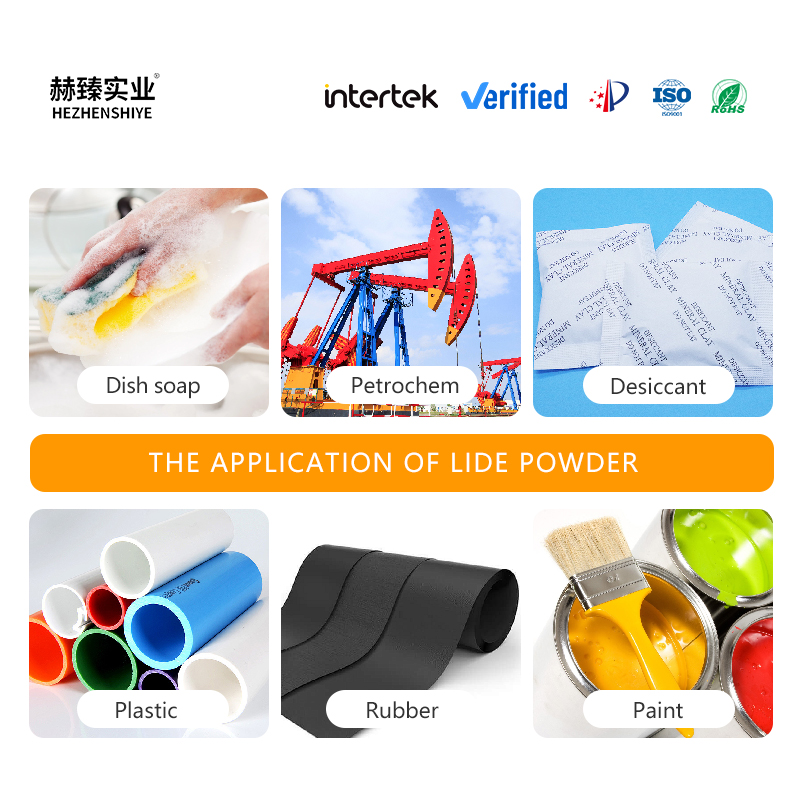
II. Diversified Application Scenarios Across the Industry (1) Laundry and Daily Chemicals (The Largest Consumer Sector, Core of Phosphorus-Free Generation):
As an eco-friendly alternative to sodium tripolyphosphate, it serves as a standard detergent aid in phosphorus-free laundry detergents, concentrated laundry solutions, handmade soap, and laundry beads; it removes limescale through ion exchange by capturing calcium and magnesium ions from water, enhancing the cleaning efficiency of surfactants; the powder adsorbs oil stains and suspended contaminants, reducing washing residues; its phosphorus-free formulation helps prevent water eutrophication at the source, making it an essential ingredient following the implementation of phosphorus bans worldwide. Additionally, small amounts are added to toothpaste, skincare products, and cosmetics as adsorption stabilizers and mild abrasives.
- Environmental Water Treatment and Waste Gas Control: Industrial Wastewater Treatment: Adsorbs and solidifies heavy metals such as lead, chromium, nickel, and cadmium from electroplating and dyeing wastewater, as well as ammonia nitrogen and small molecular organic pollutants; after regeneration, it can be reused, reducing chemical dosage costs in wastewater treatment. Waste Gas Purification: Used for exhaust gases from coating and rubber/plastic production to adsorb harmful gases like formaldehyde, hydrogen sulfide, and VOCs; it can also be added to landfill impermeable layers to intercept leachate pollutants. Civil Water Purification: Serves as filler material for small water purification systems to effectively remove scale ions from tap water, suitable for rural water purification improvement projects.
- In the rubber and plastics, chemical, and petrochemical industries, it serves as a functional filler in PVC, general-purpose rubber, and modified plastics; it adsorbs trace moisture to enhance product density and partially replaces heavy calcium carbonate and talcum powder to reduce production costs; its weakly alkaline nature neutralizes acidic small molecules generated during rubber and plastic processing, improving product heat stability. In the petrochemical sector, it is used as a dehydrating desiccant for oil products and organic solvents, as well as a carrier for catalytic reactions, utilizing its microporous structure to support catalytic active components and improve catalytic efficiency; when added to sealants and greases, it enhances thixotropy and prevents powder sedimentation.
- Animal Husbandry and Soil Improvement Feed Additives: The conventional dosage for livestock and aquatic feed is 1%–3%, which adsorbs mycotoxins and intestinal ammonia in animal digestive tracts, reduces poultry diarrhea, improves feed conversion rates, simultaneously absorbs foul odors from livestock pens, and optimizes the farming environment; Soil Conditioners: These agents improve saline-alkali and compacted soils by utilizing their porous structure to retain water and nutrients, slowly release calcium and silicon trace elements, enhance soil cation exchange capacity, and are widely applied in greenhouse fruit/vegetable cultivation and dryland crop farming.
(5) As a physical filler in interior and exterior wall coatings, anti-corrosion paints, and other specialized applications, it enhances the water resistance, mold resistance, and crack resistance of the paint film; optimizes the internal pore structure of insulation panels and refractory materials; and after deep processing and activation, it can be utilized to produce consumer products such as household dehumidification granules and food preservation desiccants.
III. Product Classification and Selection Criteria
Products are classified into three grades based on calcium exchange capacity, whiteness, and impurity content, allowing for tailored selection that balances cost and performance: -Special Grade for Daily Use: Calcium exchange capacity ≥ 300 mg/g, whiteness ≥ 95, ultra-fine particle size (2 μm), specifically designed for high-end phosphorus-free detergents and cosmetic/daily chemical products; -Industrial & Environmental Protection Grade: Calcium exchange capacity 290–298 mg/g, whiteness 92–94, primarily used in industrial wastewater treatment, rubber/plastic filling, and exhaust gas adsorption; -Agricultural & Livestock Filler Grade: Produced from solid waste processing, calcium exchange capacity 270–288 mg/g, offering excellent cost-effectiveness, widely applied in feed additives, soil improvement, and low-grade building material fillers.
Ⅳ. Industry Status and Future Development Trends: China is the world's largest producer of 4A zeolites in terms of production capacity, output, and exports, with production bases concentrated in provinces such as Shandong, Henan, Jiangxi, and Hebei. Driven by three key factors—global phosphorus restriction policies, intensified environmental regulations, and modern agricultural upgrades—the industry has experienced steady growth and is poised to develop along three main directions: Raw material greening: Production capacity for zeolites synthesized from solid wastes like fly ash and coal gangue continues to expand, gradually replacing traditional chemical raw materials while delivering dual benefits of cost reduction and pollution control; Product refinement: Ultra-fine modified and nano-scale 4A zeolites are being mass-produced and expanding into high-value applications such as lithium battery adsorbents and advanced catalyst supports; Application customization: Zeolites with tailored specifications are developed for specific industries including detergents, water purification, and feed production, precisely meeting the formulation requirements of each sector.
In conclusion, from environmental additives in laundry detergents to heavy metal adsorption materials for wastewater treatment plants, from livestock and poultry feed additives to rubber and plastic modification fillers, 4A zeolite powder has transcended industry-specific limitations through its unique microporous structure, eco-friendly safety profile, multifunctionality, and cost-effectiveness, evolving into a versatile inorganic material with cross-sector applications. Amid global trends toward low-carbon sustainability and industrial upgrading, coupled with continuous advancements in synthetic modification technologies, the application scope of 4A zeolite will continue to expand, playing an increasingly pivotal role in green industries, ecological agriculture, and new materials development.