EN
EN

News
Technical Overview: Industrial Grade Diatomaceous Earth
Diatomaceous Earth (DE) is a high-performance mineral processed from the fossilized remains of diatoms. In industrial contexts, it is often referred to as "The Sieve of Nature" due to its unrivaled microscopic structure. Unlike standard fillers, DE is a functional additive that provides porosity, high surface area, and chemical stability to advanced manufacturing processes.
1. Geological Origin and Microstructure
Diatomite deposits are formed from the accumulation of amorphous silica skeletons. Under a scanning electron microscope (SEM), these skeletons reveal a complex architecture of symmetrical holes and channels. This natural "honeycomb" design is the secret behind its high permeability and massive internal surface area, which remains stable even under high-pressure industrial filtration.
2. Physical & Chemical Performance Indicators
To meet global industrial standards (such as those required for DDP or CIF trade), high-quality DE is measured by several critical parameters:
Pore Volume and Specific Surface Area: Typical industrial grades offer a surface area of 30–70 m²/g, allowing for extreme liquid absorption and gas phase interaction.
Permeability: In filtration, the "Darcy" value measures how easily liquid passes through the DE cake. We offer grades ranging from "Fine" (low Darcy) for clarity to "Wide" (high Darcy) for speed.
High Thermal Stability: With a melting point between 1400°C and 1650°C, it remains structurally sound in high-heat environments like refractory brick production or insulation.
Low Thermal Conductivity: Its hollow structure makes it an excellent natural barrier against heat transfer .
Reinforcing Effect: The irregular shape of the diatom frustules creates a "mechanical interlocking" effect when mixed with polymers, increasing the stiffness and dimensional stability of plastics and rubbers.
3. Key Industrial Applications
3.1 Advanced Filtration (Solid-Liquid Separation)
Chemical & Metal Processing: Used for the filtration of plating baths, sulfuric acid, and industrial waste oils.
Bio-Pharma: Essential for the purification of plasma, vaccines, and various fermented antibiotics where high purity is non-negotiable.
3.2 High-Performance Building Materials
Lightweight Concrete: Reduces the density of concrete while improving its thermal insulation and fire resistance.
Specialty Mortars: Acts as a pozzolanic additive that reacts with calcium hydroxide to improve the long-term strength and durability of cement-based materials.
3.3 Functional Additives for Paints & Plastics
Matting Agent: Precisely controls the gloss levels in high-end architectural coatings without affecting the color.
Anti-Blocking Agent: Specifically used in PE/PP plastic films to prevent the layers from sticking together during storage or high-speed manufacturing.
3.4 Environmental Protection
Adsorbent for Heavy Metals: Used in wastewater treatment to capture heavy metal ions (such as $Cr, Pb, Cu$) through physical adsorption and ion exchange.
4. Technical Selection Guide for Buyers
When sourcing Diatomaceous Earth for export, the processing method determines the final application:
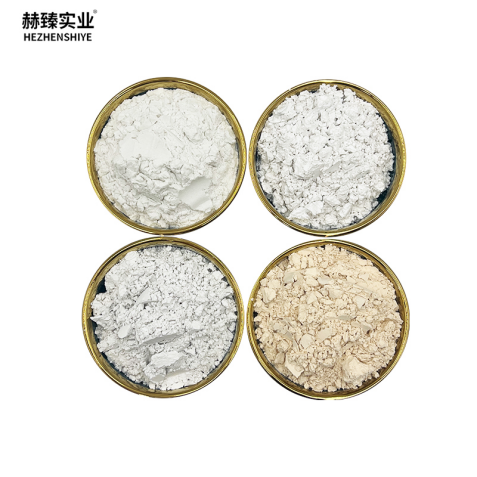
Natural Grade (Air-Dried): Best for agriculture and pest control. Contains the most active surface area.
Calcined Grade (Pink/Orange): Heat-treated at $800 \sim 1000$ °C. Best for medium-speed filtration and fillers.
Flux-Calcined Grade (White): Processed with a fluxing agent at high temperatures. Offers the highest purity and fastest flow rates for heavy-duty industrial filtration.
5. Why Choose Our Diatomite Solutions?
Our deposits are characterized by high Amorphous Silica ($\text{SiO}_2$) content and low crystalline silica, ensuring safety and compliance with international health standards (OSHA/REACH). We provide consistent particle size distribution (D50/D90) to ensure that your production line remains stable batch after batch.