EN
EN
News
Sepiolite Fiber vs Polypropylene Fiber: Key Differences & Interchangeable Applications
Sepiolite Fiber vs Polypropylene Fiber: Key Differences & Interchangeable Applications
Sepiolite fiber is a natural mineral fiber, featuring high adsorption capacity, high temperature resistance, thermal insulation, and environmental friendliness.
Polypropylene (PP) fiber is a synthetic fiber, characterized by ultra-light weight, high tensile strength, excellent chemical resistance, and cost-effectiveness.
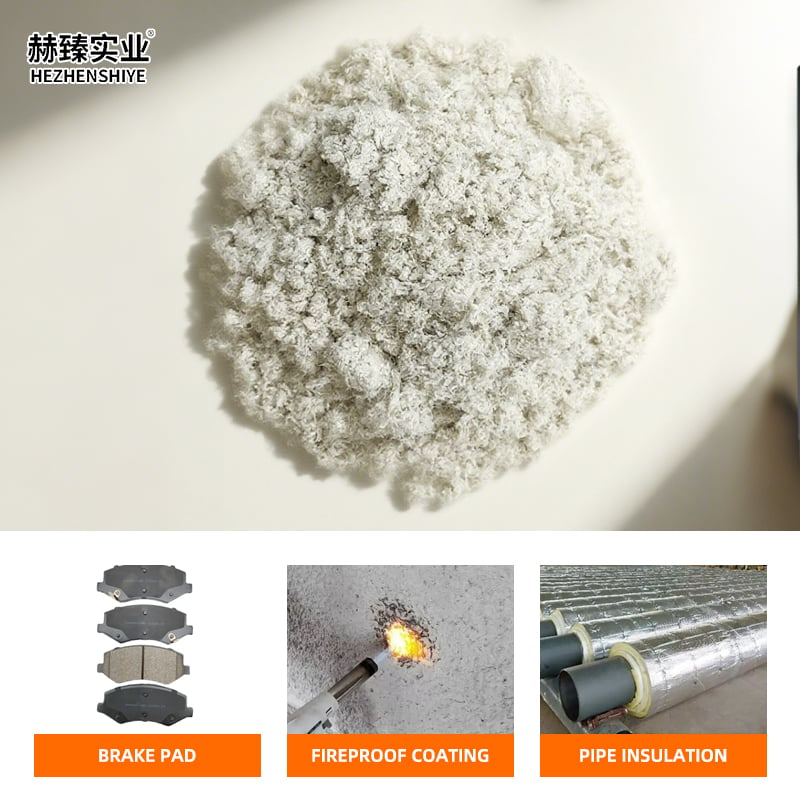
Sepiolite Fiber:
Raw Ore: Natural layered-chain hydrated magnesium silicate mineral (Sepiolite), processed via ore dressing, purification, grinding, and surface modification.
Appearance & Morphology: White / Light Gray / Pale Yellow; microscopically hair-like, needle-like, tubular, or fibrous bundles; diameter <1μm, aspect ratio >20.
Physical Properties: Density: 1.0–2.2 g/cm³; Mohs Hardness: 2–2.5; Melting Point: approx. 1650℃.
Properties:
1.High adsorption capacity: Absorbs 150%–200% of its own weight in water, with strong adsorption to organics, heavy metals and pigments.
2.High temperature resistance: Loses zeolitic water at 110°C while maintaining stable structure; low thermal conductivity and excellent thermal insulation performance.
3.Chemical stability: Resistant to acids, alkalis, corrosion and radiation; hardly degradable.
4.Eco-friendly and non-toxic: Natural mineral, biodegradable, asbestos-free and safe to use.
5.Ion exchange and catalysis: Porous channels accommodate small molecules, suitable as catalyst carrier.
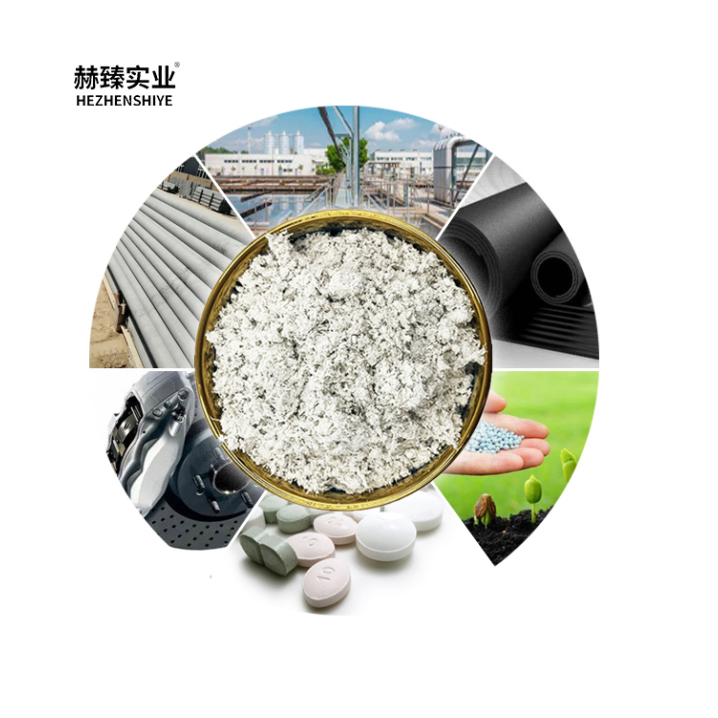
Main Applications:
1.Construction Industry: Thermal insulation materials, fire-retardant coatings,mortar/concrete reinforcement, sound insulation boards.
2.Environmental Protection: Wastewater/exhaust gas treatment, decolorants, desiccants, heavy metal adsorbents.
3.Friction Materials: Brake pads, clutch facings (asbestos replacement).
4.Oil Drilling: Drilling fluid thickening, lost circulation control, fluid loss control.
5.Others: Pharmaceutical carriers, pesticide slow-release agents, rubber/plastic fillers, textile auxiliaries.
Polypropylene Fiber(PP Fiber):
Raw Materials:Manufactured by melt spinning of polypropylene pellets (derived from petroleum refining).
Appearance & Morphology:White bundled monofilaments/staple fibers with smooth surface; available as continuous filaments, short fibers, or non-woven fabrics.
Physical Properties:
Density: 0.90–0.92 g/cm³, the lightest among all synthetic fibers.
Melting Point: 165–173°C; Softening Point: 140–150°C.
Moisture Regain: ≈0%, completely non-hygroscopic.
Properties:
1.Ultra-light and High Strength: Lowest density among fibers; strength comparable to polyester; consistent wet and dry tensile strength.
2.Abrasion and Wrinkle Resistance: Excellent elastic recovery and creep resistance; durable fabrics with easy care.
3.Chemical Resistance: Resistant to acids, alkalis, and organic solvents; mildew and insect proof.
4.Hydrophobic and Quick-drying: Good wicking capability; ideal for sportswear fabrics and filter materials.
5.Limitations: Difficult dyeing; poor light and heat resistance (prone to aging above 130°C); moderate thermal stability.
Main Applications:
1.Construction Industry: Concrete anti-crack fibers, mortar reinforcement, geotextiles, waterproof membranes.
2.Textile Industry: Sportswear, mountaineering apparel, filling waddings, carpets, ropes, fishing nets.
3.Non-woven Fabrics: Melt-blown/spunbond fabrics, face masks, diapers, filter materials, medical and hygiene products.
4.Industrial Uses: Packaging straps, woven bags, automotive interiors, cable fillings, pipeline reinforcement.
5.Agriculture: Sunshade nets, seedling cloths, weed control fabrics, fruit protection bags.
Scenarios Where the Two Can Be Used Interchangeably:
1. Mortar / Putty / Gypsum Building Materials (Thickening, Water Retention, Anti-Cracking Aid)
Reasons:
Sepiolite Fiber: Provides thickening, water retention, anti-sagging, excellent thixotropy, and high temperature resistance.
PP Fiber: Offers micro anti-cracking performance, toughness, and prevents dry shrinkage cracks.
Substitution Relationship: Can be blended or partially replaced with each other.
Cost Reduction for Small Manufacturers: Partial replacement of sepiolite with PP fiber.
High-Temperature Resistance Applications: Partial replacement of PP with sepiolite fiber.
Prerequisite: Minor adjustments to viscosity and water addition ratio in the formula.
2. General Non-Woven Filling / Low-Cost Absorbent Pad Base Structure (Interchangeable for Low-End Civil Use)
Both can reinforce padding layers.
Water-Absorbent Pads: Prefer Sepiolite.
Hydrophobic & Anti-Tear Pads: Prefer PP.
One-way substitution only; not reversible:
1. Replacing PP Fiber with Sepiolite Fiber
(1) Fire-retardant Coatings & Fireboard FillersReason for Replacement: PP melts and drips under high temperature, posing a combustion-supporting risk. Therefore, it must be replaced with sepiolite fiber.
(2) High-temperature Kiln Insulation LayersReason for Replacement: PP fiber softens and collapses at 160°C. Sepiolite fiber features extreme thermal stability, making it an excellent alternative.
Summary of Application Scenarios:
For fire resistance, thermal insulation, water absorption & plugging, and environmental adsorption applications: Prioritize Sepiolite Fiber. Do NOT replace it with PP Fiber.
For anti-crack toughening, lightweight corrosion resistance, and cost-effective mortar/concrete projects: Prioritize PP Fiber. Do NOT replace it with Sepiolite Fiber.
For low-end filling in general putty and gypsum: The two fibers can be partially interchanged.