EN
EN



ISO9001 Approved Industrial Hollow Lightweight Plastic Rubber Reinforcement Filler Glass Microballoon Glass Microsphere
Parameter
Precise Spherical Uniform Structure: This premium glass microsphere material is fabricated through high-temperature melting and precise atomization molding technology, forming highly regular hollow and solid spherical microscopic units. Every microsphere maintains uniform roundness and complete structural symmetry without irregular fragments, deformed particles or angular defects. The standardized spherical morphology delivers stable physical performance and consistent structural foundation for industrial filling, coating modification and precision material compounding applications
Ultra-Low Bulk Density Advantage: Featuring unique hollow internal structure and lightweight glass matrix characteristics, glass microspheres present extremely low bulk density compared with traditional mineral fillers. When blended into coatings, plastics, rubber and composite materials, it effectively reduces the overall finished product weight, realizes lightweight structural optimization, and lowers base load pressure for engineering components and decorative materials
Excellent Dispersion Performance: Undergoing professional surface modification and anti-agglomeration treatment, glass microspheres achieve outstanding dispersion stability in water-based, solvent-based and high-temperature melt systems. The spherical particles can be evenly distributed in various formula systems without clustering, floating or layered precipitation, ensuring uniform texture and consistent functional performance of batch-produced composite materials
Enhanced Surface Smoothness: The ultra-fine and uniform spherical particles fill microscopic gaps and surface voids of polymer and coating substrates effectively. They optimize the flatness and delicate texture of finished product surfaces, reduce surface roughness, and minimize post-processing polishing and grinding procedures for industrial and decorative materials


Glass microspheres are tiny, hollow or solid spherical particles made from soda-lime glass or borosilicate glass. They feature low density, high sphericity, good chemical resistance, and smooth surface. They are widely used as lightweight fillers, extenders, and functional additives in coatings, paints, plastics, rubber, composites, and industrial materials fields
The main exporting regions include United States, Germany, Japan, and South Korea, etc
When importing glass microspheres, key quality points focus on particle size distribution, sphericity, bulk density, hollow rate (for hollow types), chemical purity, and surface finish. The product should be free of impurities, broken beads, and agglomeration, with consistent particle performance
Glass microspheres are usually packaged in moisture-proof woven bags or kraft paper bags with inner plastic liners, which are tightly sealed to prevent moisture absorption, contamination, and dust leakage during transportation. For large bulk industrial orders, ton bags are commonly used, and packaged goods are often fixed on pallets with stretch film to ensure stability in loading, unloading, and long-distance transit
Common trade terms in glass microspheres transactions include FOB (Free On Board), CIF (Cost, Insurance and Freight) and EXW (Ex Works). The selection of specific terms depends on the negotiation between buyers and sellers on transportation responsibility, cost allocation, and risk transfer
Generally required documents cover commercial invoice, packing list, bill of lading or airway bill, certificate of origin, quality inspection report
Most glass microspheres suppliers accept mainstream international payment methods, mainly telegraphic transfer (T/T) and letter of credit (LC). The conventional industry practice is to pay a certain proportion of deposit when placing an order to confirm production arrangement, and settle the balance before shipment or against the copy of the bill of lading, which effectively reduces transaction risks for both parties
Yes, suppliers can provide customized products according to customers' actual industrial application needs. For example, they can adjust the particle size range, surface treatment process (such as silane coating), and wall thickness (for hollow beads) to improve the product's compatibility and performance in different application scenarios such as coatings, plastics, and lightweight composites, and customize packaging specifications to adapt to different storage and transportation demands
Hezhen presents an ISO9001 industrial filler solution engineered to transform polymer formulations: glass micro=balloon filler designed as hollow microsphere reinforcement to deliver exceptional lightweight plastic rubber additive performance across demanding industrial applications. This glass micro=balloon filler combines the unique benefits of hollow microsphere reinforcement with precise particle engineering to produce a lightweight plastic rubber additive that consistently improves processing, reduces mass, and enhances mechanical properties while maintaining dimensional stability. Hezhen’s ISO9001 industrial filler portfolio positions glass micro=balloon filler as the preferred hollow microsphere reinforcement for formulators seeking to balance cost, performance, and sustainability in modern manufacturing.
Designed specifically as a glass micro=balloon filler and hollow microsphere reinforcement, Hezhen’s product offers a highly uniform distribution of hollow glass microspheres that act as a lightweight plastic rubber additive within thermoplastic, thermoset, and elastomeric matrices. As a glass micro=balloon filler, the hollow microsphere reinforcement reduces composite density without compromising stiffness. When used as a lightweight plastic rubber additive, the hollow microsphere reinforcement lowers part mass and improves thermal insulation and acoustic damping. The combination of glass micro=balloon filler and hollow microsphere reinforcement enables formulators to achieve tailored performance improvements in weight-sensitive applications such as automotive interiors, structural composites, sealants, and molded rubber components.
Hezhen’s glass micro=balloon filler provides engineered hollow microsphere reinforcement through controlled wall thickness, nominal particle size distribution, and superior Sphericity. Each hollow microsphere reinforcement particle functions as a micro-scale void that delivers low density while preserving compressive strength. In practice, the glass micro=balloon filler forms a network of carefully dispersed hollow microspheres that act as lightweight plastic rubber additive sites throughout the matrix. This microstructure yields a composite whose bulk density is reduced while its specific stiffness is often improved, a key advantage when glass micro=balloon filler is used alongside traditional fillers and fibers to create optimized hybrid systems.
From a processing perspective, the glass micro-balloon filler delivers consistent rheological behavior when incorporated as hollow microsphere reinforcement. The low true density of Hezhen’s hollow microsphere reinforcement minimizes viscosity increase compared with dense mineral fillers, so formulators can add significant volumes of glass micro-balloon filler without the severe compounding or extrusion penalties typical of heavy fillers. In rubber mixing and compounding, the glass micro-balloon filler acts as a lightweight plastic rubber additive that improves slump control, reduces compound weight, and can enhance mold filling. For thermoset formulations such as epoxy, polyurethane, and silicone, the glass micro-balloon filler provides improved handling, reduced Exotherm, and better thermal insulation properties when used as hollow microsphere reinforcement.
The application versatility of Hezhen’s glass micro-balloon filler covers many industrial sectors. As hollow microsphere reinforcement for automotive composites, it reduces component mass and improves fuel efficiency while meeting demanding crash and vibration performance targets. As a construction-grade lightweight plastic rubber additive, the glass micro-balloon filler improves thermal insulation in panels, sealants, and adhesives and acts as a dimensionally stable filler to reduce shrinkage and warpage. In marine and wind-energy composites, the hollow microsphere reinforcement reduces buoyancy and improves fatigue life through its low-density contribution to laminate architecture. For consumer electronics and appliance housings, the glass micro-balloon filler provides weight reduction and improved thermal management when integrated as a lightweight plastic rubber additive.
Innovation in Hezhen’s glass micro-balloon filler stems from precision manufacturing and surface treatment options that enhance compatibility as hollow microsphere reinforcement. Surface-treated variants of the glass micro-balloon filler improve wetting and dispersion in polar and nonpolar matrices, optimizing interfacial adhesion and mechanical transfer. When specified as a lightweight plastic rubber additive, the glass micro-balloon filler’s tailored surface chemistries minimize agglomeration during mixing and maximize the reinforcing effect of each hollow microsphere reinforcement particle. Hezhen’s material scientists refine the glass micro-balloon filler through tight control of microsphere wall composition and curing parameters to deliver consistent performance as hollow microsphere reinforcement across batches.
Technical advantages of choosing Hezhen’s glass micro-balloon filler include high compressive strength-to-weight ratio, narrow particle size distributions, and excellent thermal stability. The hollow microsphere reinforcement exhibits low moisture uptake and chemical inertness, which makes the glass micro-balloon filler suitable for long-term outdoor exposure and harsh chemical environments. As a lightweight plastic rubber additive, the glass micro-balloon filler contributes to improved acoustic damping and thermal insulation without sacrificing dimensional stability. The hollow microsphere reinforcement’s spherical geometry promotes Flowability and facilitates higher packing efficiency, allowing formulators to achieve targeted property balances with less total filler loading compared with irregularly shaped fillers.
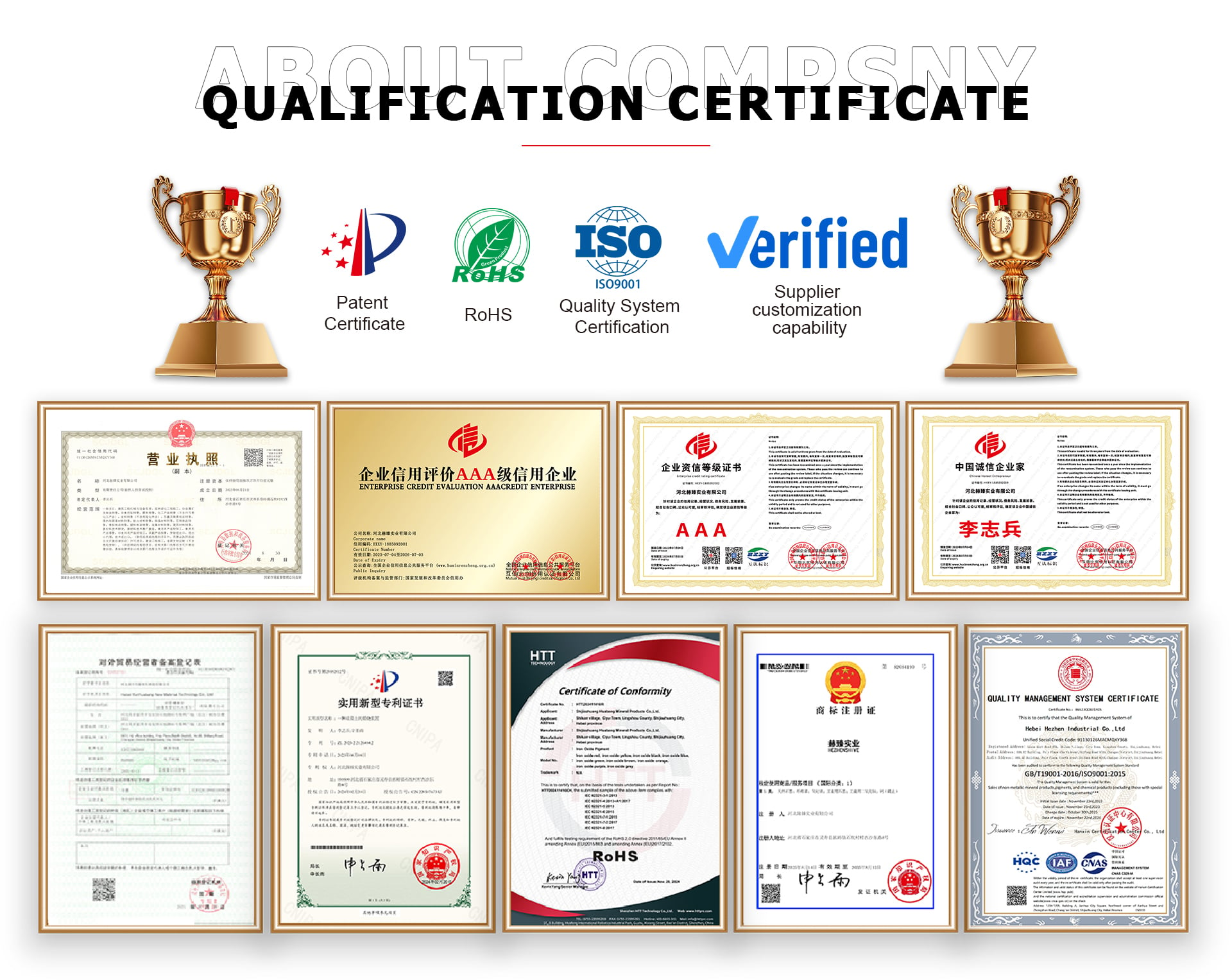
Hezhen’s ISO9001 industrial filler production ensures rigorous quality control protocols for the glass micro-balloon filler, guaranteeing consistent hollow microsphere reinforcement performance from batch to batch. The ISO9001 industrial filler certification reflects Hezhen’s commitment to process control, traceability, and continuous improvement for all glass micro-balloon filler products. This quality framework supports formulators who depend on the predictable behavior of each hollow microsphere reinforcement lot, enabling confident specification of the glass micro-balloon filler in critical applications that require regulatory and performance documentation.
Practical formulation guidelines for using this glass micro-balloon filler as hollow microsphere reinforcement and lightweight plastic rubber additive are straightforward. Typical loading levels of glass micro-balloon filler vary by application: low to moderate loadings enhance weight and thermal benefits while preserving tensile properties, whereas higher loadings maximize density reduction and thermal insulation with trade-offs in elongation. When incorporating Hezhen’s glass micro-balloon filler as hollow microsphere reinforcement, dispersive and distributive mixing steps should be optimized to minimize breakage of the hollow microspheres and to preserve the lightweight plastic rubber additive effect. Surface-treated glass micro-balloon filler grades are recommended for polar resins, while untreated grades may be adequate for nonpolar rubber systems where interfacial bonding is less critical.
Sustainability advantages of Hezhen’s glass micro-balloon filler follow from material efficiency: by enabling significant mass reduction through hollow microsphere reinforcement, the glass micro-balloon filler helps reduce energy consumption in transport and lowers the environmental footprint of finished products. The lightweight plastic rubber additive function of the glass micro-balloon filler also supports the use of smaller amounts of high-density raw materials and can contribute to end-product Recyclability strategies when integrated into compatible polymer matrices.
Our Strength