EN
EN

News
Engineered Micro Monofilament Polypropylene Fiber: Eliminating Explosive Fire Spalling, Inhibiting Plastic Shrinkage Cracking, and Enhancing Impermeability in High-Performance Concrete by hezhensy industrial
Resolving Early Plastic Cracking and High-Temperature Explosive Spalling in Modern Structures
In high-rise commercial towers, subterranean metro stations, immersed tunnels, and high-performance precast concrete elements, structural consultants and civil engineers face two critical material vulnerabilities throughout the concrete lifecycle:
- Early-Age Plastic Shrinkage Cracking: During the initial 2 to 24 hours after placement, rapid surface moisture evaporation generates high capillary tensile stresses in fresh concrete and mortar. Because the early tensile strength of the unhardened paste is near zero, micro-cracks form and propagate, creating open pathways for water, chlorides, and carbon dioxide ingress.
- Catastrophic Explosive Spalling in High-Temperature Fires: Dense, low-permeability ultra-high-performance concrete (UHPC) and high-strength concrete (C60+) trap free moisture and chemically bound water inside tightly packed micro-pores. Under standard ISO 834 or hydro-carbon fire curves (e.g., RWS / RABT), temperatures exceed , converting trapped water into superheated steam. Without adequate escape channels, internal pore pressure rises rapidly until violent, explosive spalling occurs, exposing load-bearing rebar to direct flames and causing premature structural collapse.
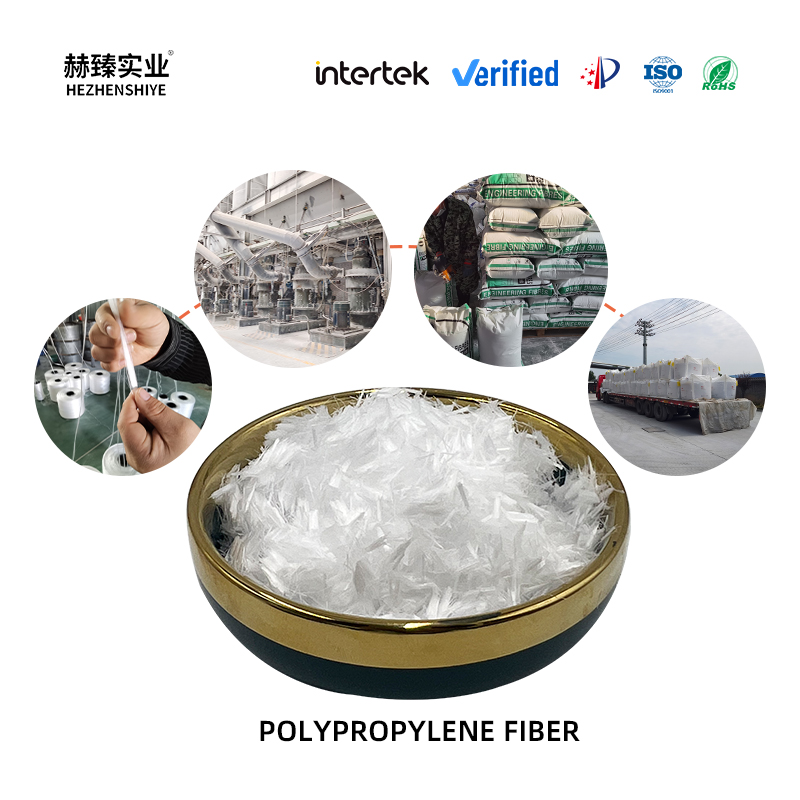
hezhensy industrial engineered micro monofilament polypropylene fiber provides an advanced multi-stage protective solution. Manufactured from high-purity virgin isotactic polypropylene () through precision melt spinning, high-draw molecular orientation, and specialized hydrophilic surface grafting, our microfibers disperse into tens of millions of individual filaments per kilogram ( diameter, cut lengths). Compliant with ASTM C1116/C1116M Type III and EN 14889-2:2006 Class Ia standards, this material delivers dual-stage protection: substantially reducing early plastic shrinkage cracking () and creating micro-capillary vapor relief channels at to prevent explosive fire spalling.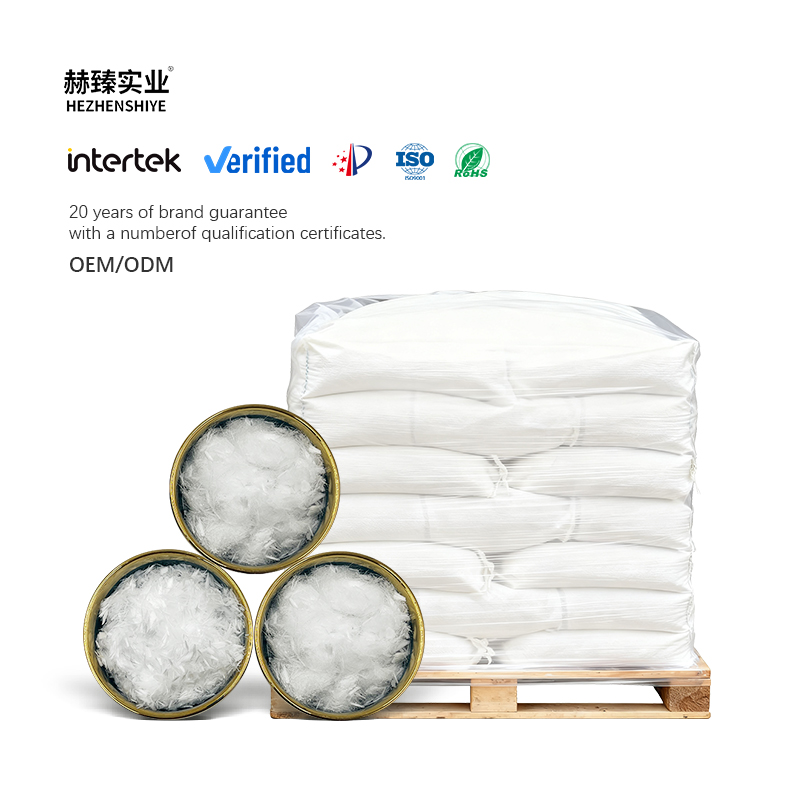
Dual-Stage Protection Mechanism: Early-Age Cracking vs. Fire Spalling
- Plastic Shrinkage Inhibition & Micro-Crack Bridging: During the plastic state, millions of hydrophilic-treated microfibers form a uniform, three-dimensional micro-reinforcing mesh throughout the cementitious paste. These fibers bridge bleeding water capillaries, reducing local water settlement and absorbing plastic shrinkage strain energy. Laboratory and field testing demonstrates that dosing cuts early plastic cracking by more than , increases impermeability by over , and improves freeze-thaw durability.
- Thermal Melting & Vapor Relief Network (Anti-Spalling): When exposed to elevated temperatures during a fire, polypropylene microfibers begin softening at approximately and melt completely at . As temperatures continue to rise, the molten polymer volatilizes or is absorbed into the surrounding porous cement matrix, leaving an interconnected network of micro-capillary relief channels throughout the dense concrete cover. These channels vent superheated steam (), preventing internal pore pressure from exceeding the tensile capacity of the concrete and eliminating explosive spalling.
- Hydrophilic Surface Chemistry for Rapid Dispersion: Untreated synthetic microfibers can clump due to static charges and hydrophobic properties. hezhensy industrial applies an advanced inline hydrophilic and anti-static coating during cutting. Upon contact with wet aggregates and mixing water, the fibers separate into individual filaments within 60 to 90 seconds in standard transit mixers, requiring no specialized batching equipment.
Technical Specifications: hezhensy Micro Monofilament Series
hezhensy industrial manufactures precision-cut micro monofilament polypropylene fibers with consistent filament diameters, high tensile strength, and uniform lengths:
Downstream Application Recommendations
1. Passive Fire Protection in High-Rise Buildings, Tunnels, and Nuclear Facilities
In bored tunnel segments, underground rail hubs, high-rise structural columns, and nuclear containment domes, dosing of hezhensy micro monofilament fiber satisfies strict European fire safety codes (such as RWS and ISO 834 curves). The microfibers prevent concrete spalling up to , protecting structural steel reinforcement and maintaining primary load-bearing capacity.
2. High-Performance Precast Concrete & UHPC Architectural Panels
In precast facade panels, utility trenches, railway sleepers, and architectural ultra-high-performance concrete (UHPC), incorporating of microfiber improves early green handling strength, eliminates sharp edge chipping during demolding, and prevents thermal hairline cracking.
3. Anti-Crack Plasters, Stuccos, and Thermal Insulation Mortars
In exterior insulation finishing systems (EIFS/ETICS), masonry wall plasters, and self-leveling cementitious screeds, adding of microfibers eliminates map-cracking and wall hollowing, improving adhesion and weatherproofing performance.
4. Hydraulic Structures and Water Treatment Reservoirs
For dams, wastewater treatment tanks, irrigation canals, and swimming pools, the microfiber mesh reduces internal water bleeding channels, increasing water impermeability by over and enhancing resistance to cyclic wet-dry and freeze-thaw degradation.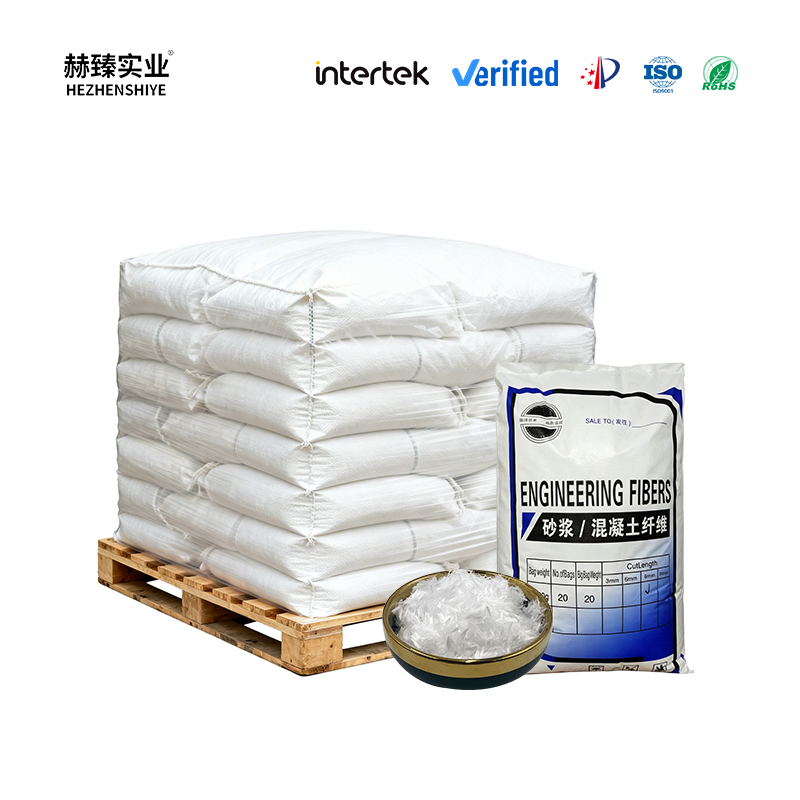
Global Compliance, Quality Control, and Export Packaging
To support automated batching systems and international construction site standards:
- International Standards Compliance: Certified compliant with EN 14889-2:2006 (Class Ia Micro Polymer Fibers for Concrete), manufactured according to ASTM C1116/C1116M Type III, compliant with EU REACH regulations, and produced under an ISO 9001:2015 quality management system.
- Water-Soluble Paper Bag Packaging: Pre-weighed in or biodegradable, water-soluble kraft paper bags. Concrete mixing trucks can drop intact bags directly into the mixing drum without opening, ensuring dust-free handling and exact dosage control.
-
Export Packaging Options:
- Standard Master Packaging: 20 to 25 water-soluble bags packed in / heavy-duty woven polypropylene outer bags or corrugated master cartons.
- Bulk Packaging: and bulk bags for automated batching plant silos.
- Container Palletization: Palletized on ISPM-15 fumigated solid wood pallets with heavy-duty corner boards and vacuum stretch-hood wrapping for international maritime transit.
Partner with hezhensy industrial
Protecting critical concrete structures from early plastic cracking and catastrophic fire spalling requires engineered micro-reinforcement. hezhensy industrial supplies international engineering contractors, ready-mix producers, and precast manufacturers with certified micro monofilament polypropylene fibers.
Contact our technical civil engineering team today to request comprehensive technical data sheets (TDS), fire safety test reports, dosage recommendations, and evaluation sample kits.
Disclaimer: Recommended addition rates and fire performance depend on concrete compressive strength class, moisture content, aggregate grading, and project-specific fire design curves (e.g., ISO 834 vs. RWS). Certified physical and mechanical parameters are confirmed on each shipment via our official Certificate of Analysis (COA).