EN
EN

News
Eco-friendly Origin and Full Processing of Premium Compressed Coco Peat Bricks
Time : 2026-06-23
Compressed coco peat brick is a sustainable organic planting substrate made purely from coconut husk byproducts, which has become a popular eco-alternative to limited natural peat soil across global gardening and farming industries. Different from ordinary low-grade coco bricks made from mixed rotten coconut materials, our coco peat bricks adopt classified tropical coconut raw materials and full physical processing without chemical bleaching or additive doping. This article introduces its crop origin, raw material collection rules, harmless processing technology, salt removal treatment and factory quality standards, helping overseas buyers know our product source advantages, stable performance and eco-friendly production concepts for long-term bulk order cooperation.
Exclusive raw material supply from standardized tropical coconut plantation bases. Our raw coconut husks are sourced from large-scale managed coconut plantations located in tropical coastal zones, featuring year-round warm climate, sufficient sunlight and clean rainwater. These well-managed plantations grow mature coconut palms with thick, healthy outer husks, free from industrial soil pollution and pesticide residue. We only collect husks from fully ripened 12-month mature coconuts, instead of immature green coconuts. Immature coconut husks contain high natural alkali and crude fiber, which will hinder plant root growth. All collected husks are pure agricultural renewable byproducts: coconut flesh and coconut water are harvested for food and beverage industry, and the leftover outer husks are reused to produce coco peat, achieving zero-waste circular agricultural utilization without destroying wetland ecology.
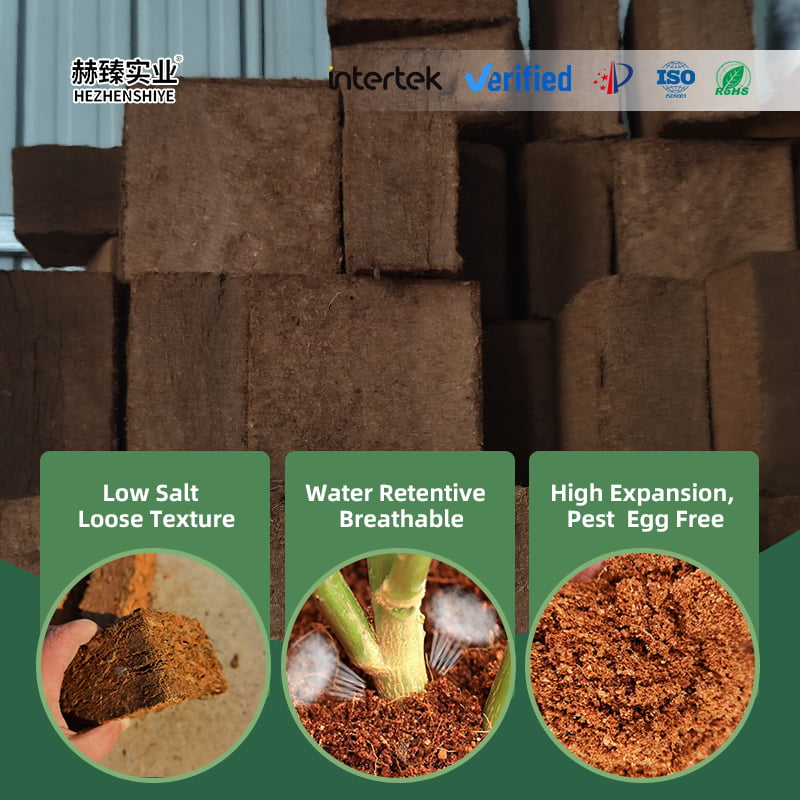
Strict manual sorting and natural outdoor curing for raw coconut husks. After centralized collection, all coconut husks go through two-round manual and mechanical impurity screening. Workers remove rotten husks, moldy parts, insect-damaged husks, hard coconut shell fragments, tree branches, soil stones and other foreign impurities completely. Qualified intact husks are transported to ventilated open curing yards for natural outdoor curing for 30 to 45 days. Different from rapid machine-cured husks used by cheap manufacturers, natural wind and rain curing can automatically decompose redundant natural tannins and crude salt inside fiber tissues, soften rigid fiber texture, and improve water absorption and air permeability of finished coco peat. This natural curing step lays a foundation for low-EC, plant-friendly finished coco bricks.
Mechanical fiber separation and graded purification for customized raw materials. After full curing, husks are delivered to closed automatic splitting machines to separate coarse long coir fiber and fine coco pith separately. Coarse fiber is reserved for making gardening mats and erosion control nets, while fine fluffy coco pith is the exclusive raw material for compressed planting coco bricks. We grade coco pith into fine particle grade and medium fiber grade to make targeted bricks for potted flowers, seedling breeding and reptile bedding respectively. Impurity removal fans remove tiny dust, broken crumbs and residual sundries repeatedly, ensuring the finished substrate has ultra-low impurity content, no hard blocks and no sharp fiber that may hurt plant roots or pet skin.
Multi-stage flowing water desalination and balanced pH adjustment is our core production advantage. Natural coconut pith contains soluble chloride salt that harms sensitive plants. We adopt segmented circulating running water cleaning, rather than static pool soaking used by common factories. The segmented washing process gradually reduces salt content, stably adjusts pH value to weak acid state which fits most ornamental plants and crops. No chemical neutralizer, bleach or color fixing agent is added during the whole washing process. After washing, qualified coco pith is pressed by mechanical filter equipment to drain excess water, then treated with low-temperature natural wind drying to protect organic fiber activity, avoid fiber brittle damage caused by high-temperature oven drying, and keep original microbial balance of organic coco substrate.
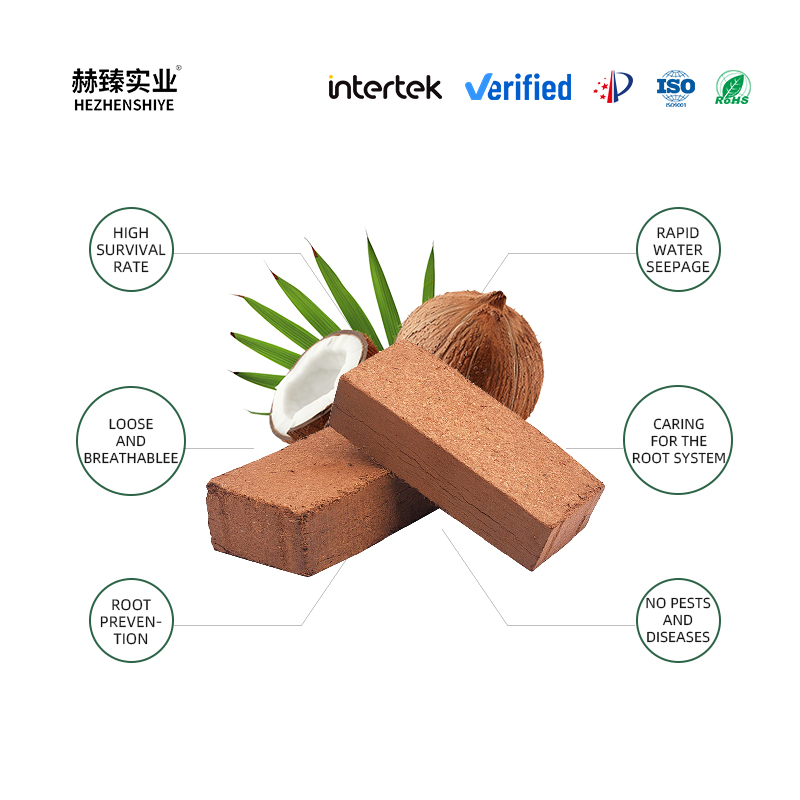
High-pressure compression, batch inspection and export-grade moisture-proof packaging. Dried qualified coco peat is pressed into uniform standard bricks via environmental-friendly hydraulic compressors. Compressed bricks reduce transportation volume greatly, cut ocean freight cost and save warehouse storage space. Every batch is tested in our independent laboratory on EC value, pH level, weed seed rate, impurity content and expansion ratio. We reject unqualified products with high salt, mold and excessive impurities. Final products are packed with thick waterproof breathable film, preventing moisture absorption, mildew and dirt contamination during long-distance sea shipping. To sum up, our coco peat bricks come from pollution-free tropical coconut plantations, processed via natural curing, pure physical washing and standardized compression. With traceable source, zero chemical addition and stable planting performance, our products are safe, eco-friendly and cost-effective for global gardening, farm planting and pet breeding customers.