EN
EN

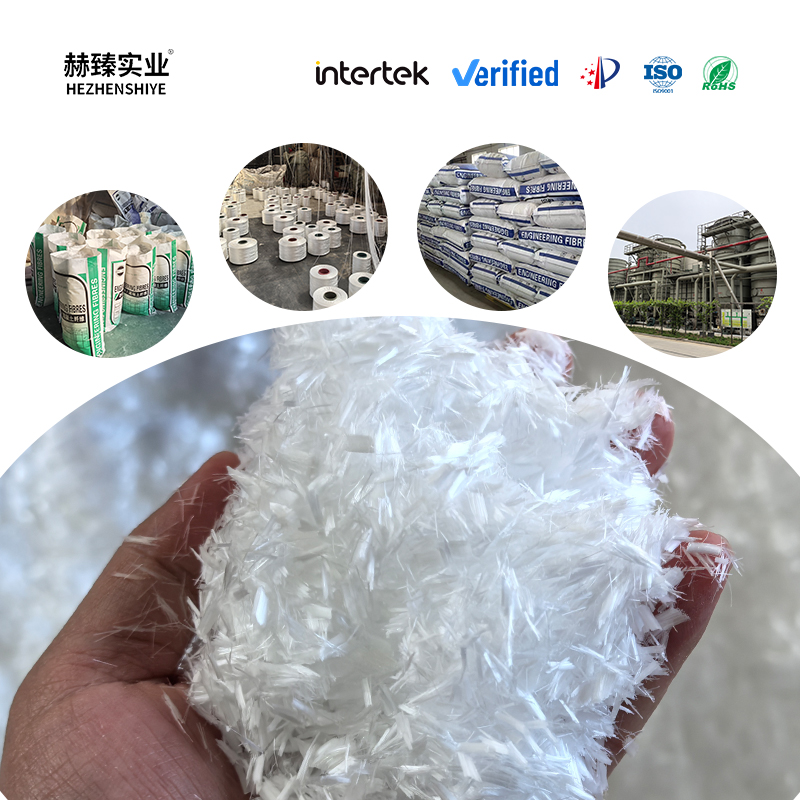
Polypropylene fiber is a lightweight, high-strength synthetic fiber widely used in modern building mortar modification. With stable chemical properties, excellent tensile strength and uniform dispersion performance, it has become a common and cost-effective functional additive for various cement-based mortar products. It effectively solves many inherent defects of traditional pure cement mortar, greatly improving the construction quality, surface finish and long-term durability of mortar engineering. This article explains the core functions and practical advantages of polypropylene fiber in the mortar industry in simple and easy-to-understand language.
Traditional ordinary mortar is composed of cement, sand and water. After construction and curing, it is prone to various quality problems such as shrinkage cracking, poor toughness, low wear resistance and easy peeling. These common defects are mainly caused by volume shrinkage during water evaporation, insufficient internal tensile force and poor structural compactness. The addition of polypropylene fiber can form a uniform three-dimensional distributed fiber network inside the mortar matrix. This dense fiber structure can effectively restrict mortar volume changes, balance internal stress, and fundamentally improve the overall performance of finished mortar products.
The most core function of polypropylene fiber in mortar is anti-cracking and shrinkage resistance. During the mortar curing process, internal moisture will gradually evaporate, resulting in dry shrinkage and temperature shrinkage. Unmodified mortar is easy to produce fine cracks and surface cracks, which affect the flatness and aesthetics of the wall and ground, and further expand into structural cracks over time. Countless tiny polypropylene fibers are evenly distributed inside the mortar, which can effectively bear and disperse the shrinkage stress generated during hardening. It inhibits the occurrence and expansion of early micro-cracks, greatly reduces the cracking rate of mortar walls, floors and plastering layers, and ensures the integrity of the building surface structure.
Polypropylene fiber significantly enhances the toughness and impact resistance of mortar. Pure cement mortar is a brittle material with poor flexibility and weak impact resistance. It is easy to peel, fall off and damage when subjected to external impact, vibration and extrusion. After adding polypropylene fiber, the internal bonding force and tensile toughness of mortar are greatly improved. The fiber network can absorb external impact energy, buffer structural vibration, and avoid local peeling and damage of the mortar layer. This performance is very suitable for wall plastering, ground leveling, exterior wall insulation mortar and engineering repair mortar that need long-term stable use.
This fiber material can effectively improve the impermeability and frost resistance of mortar. There are a large number of tiny capillary pores inside ordinary mortar, which easily absorb external rainwater and moisture. In humid environments or low-temperature seasons, water penetration will cause mildew, hollowing and freezing damage. The uniformly distributed polypropylene fibers can block the continuous capillary channels inside the mortar, reduce water permeability, and improve the overall compactness of the mortar layer. It reduces water and moisture penetration, enhances the frost resistance of mortar in cold seasons, and avoids structural damage caused by water freezing and volume expansion.
Polypropylene fiber has excellent chemical stability and strong adaptability in cement mortar. It is acid and alkali resistant, and will not corrode, age or degrade in the alkaline environment of cement hydration. It can maintain stable fiber toughness and structural tension for a long time, providing lasting protection for mortar engineering. In addition, the fiber has good dispersion, no agglomeration and no floating fiber during mixing. It has high compatibility with cement, sand and various mortar additives, does not change the basic setting time and construction performance of mortar, and will not affect on-site construction efficiency.
In practical construction applications, polypropylene fiber is suitable for all kinds of conventional mortar products, including plastering mortar, waterproof mortar, thermal insulation mortar, bonding mortar, repair mortar and floor self-leveling mortar. It features low dosage, obvious effect and low comprehensive cost. It does not need complex construction processes, and can be directly mixed with raw materials in proportion for use, which is fully compatible with large-scale building construction and mortar factory production.
In short, polypropylene fiber is a practical and high-cost-performance mortar modifier. It effectively solves common problems such as mortar cracking, hollowing, poor water resistance and weak impact resistance. It stabilizes construction quality, prolongs building service life, and brings reliable quality improvement and economic benefits to building mortar projects.