EN
EN

News
Bentonite Powder for Global Industry: A Functional Mineral Solution by hezhensy industrial
From Layered Clay Structure to Application-Specific Performance
As manufacturers and engineering contractors pursue more stable, efficient and environmentally responsible material solutions, natural mineral products are being evaluated according to their functional performance rather than their raw-material identity alone. Bentonite powder is one of the most adaptable examples. Its ability to absorb water, form colloidal structures, modify rheology, bind particles and adsorb selected substances makes it valuable across construction, drilling, foundry, environmental protection, agriculture and industrial formulation.
hezhensy industrial bentonite powder is supplied for international buyers who need a mineral material matched to a specific process, formulation or engineering objective. Our product range covers sodium-based, calcium-based, activated and organically modified bentonite, with grade selection guided by swelling behavior, viscosity, particle size, adsorption requirements, compatibility and operating conditions.
The right bentonite is not determined by the product name alone. Mineral composition, montmorillonite content, processing history, modification method and test conditions all influence the final performance.
Understanding the Functional Structure of Bentonite
Bentonite is a natural clay mineral mainly composed of montmorillonite. Its layered silicate structure contains exchangeable ions and provides a large active surface. When exposed to water, selected bentonite grades can absorb moisture, expand and form a stable colloidal or gel-like system.
This structural behavior gives bentonite several complementary functions:
- Water absorption and swelling
- Sealing and low-permeability formation
- Thixotropic viscosity control
- Particle binding and suspension stabilization
- Adsorption and ion exchange
- Plasticity and formability
- Compatibility with selected cement, polymer, resin and liquid systems
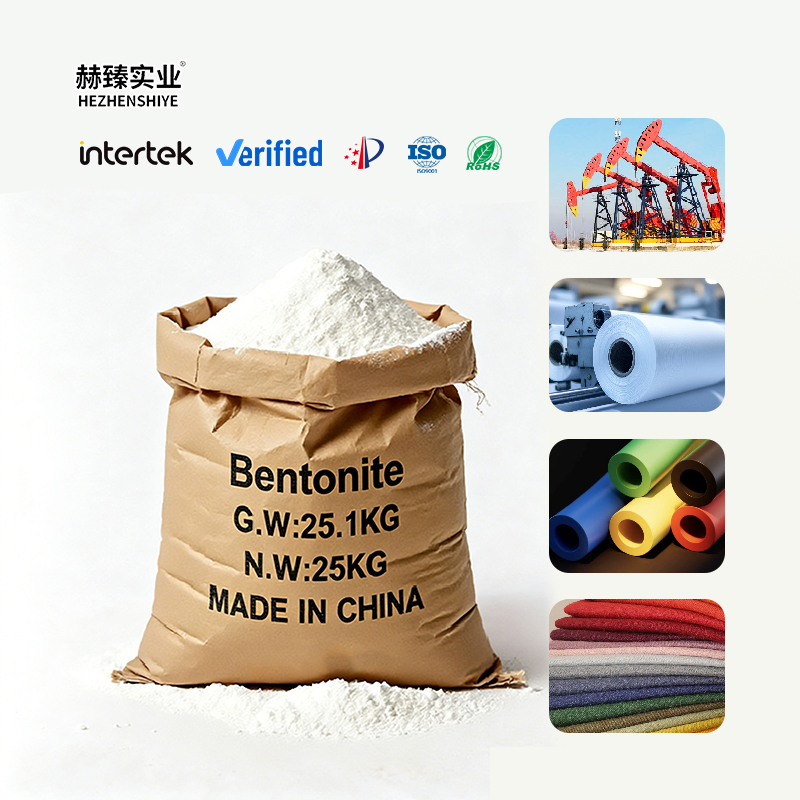
The strength of each function depends on the grade and application. Sodium bentonite is generally selected when expansion and sealing are important. Calcium bentonite may be preferred for selected agricultural, feed or general mineral applications. Activated bentonite is evaluated for enhanced adsorption or decolorization, while organic bentonite is developed for oil-based and other non-aqueous systems.
Key Performance Advantages of Bentonite Powder
Water Absorption, Swelling and Sealing
When suitable bentonite comes into contact with water, it can absorb moisture and expand, forming a dense mineral gel. This behavior allows it to fill small gaps and create a sealing layer in properly designed construction and geotechnical systems.
Bentonite powder can therefore be evaluated for:
- Waterproofing materials
- Anti-seepage barriers
- Tunnel and basement engineering
- Dam and reservoir sealing
- Landfill liner systems
- Slurry walls
- Underground construction
The actual swelling volume, gel strength, permeability and service life depend on mineral grade, water chemistry, pressure, confinement, temperature and installation conditions. Project buyers should confirm performance through application-specific testing rather than relying on a general swelling claim.
Thixotropy and Rheological Control
Bentonite can provide a useful balance between fluidity during mixing and structure recovery during rest. This thixotropic behavior helps stabilize suspensions, control viscosity and reduce particle settling in suitable liquid systems.
These characteristics are important in:
- Water-based drilling fluids
- Construction slurries
- Coatings
- Mortars
- Adhesives
- Foundry mixtures
- Mineral and chemical suspensions
For drilling and slurry applications, the selected grade must be matched to the required viscosity, filtration control, salt tolerance, temperature range and mixing equipment. A product that performs well in freshwater may require different evaluation in saline or chemically complex systems.
Adsorption and Ion-Exchange Potential
The active surface and layered structure of bentonite enable it to interact with selected ions, pigments, oils and organic substances. This makes bentonite useful as an adsorbent, carrier or auxiliary purification material in suitable processes.
Potential applications include:
- Industrial wastewater treatment
- Heavy-metal immobilization
- Soil remediation
- Liquid decolorization
- Oil and grease adsorption
- Feed-material processing
- Environmental filtration and containment
The adsorption result depends on the target substance, pH, contact time, concentration, competing ions and modification method. hezhensy industrial recommends evaluating the material under the customer's actual process conditions before confirming a long-term supply grade.
Binding, Plasticity and Formulation Support
Bentonite has good cohesiveness and plasticity, allowing it to bind sand, powder and other particulate materials. It can improve the integrity of mixtures and support shaping, molding or pelletizing processes.
This function is used in:
- Foundry sand binders
- Metallurgical pelletizing
- Ceramic and mineral formulations
- Fertilizer granulation
- Feed binding
- Building-material mixtures
- Industrial composite materials
The required balance between binding strength, moisture, flowability and thermal behavior varies from one formulation to another. Particle size and moisture control are especially important for consistent processing.
Bentonite Grades for Different Industrial Requirements
Sodium-Based Bentonite
Sodium-based bentonite is commonly selected for applications that require stronger swelling, sealing, suspension or bonding performance. Typical use areas include drilling fluids, foundry molding sand, geotechnical sealing and selected waterproofing systems.
Calcium-Based Bentonite
Calcium-based bentonite is used in applications where moderate swelling, adsorption, binding or soil-conditioning performance is required. It may be evaluated for agriculture, feed-related applications, general absorbent products and selected industrial formulations.
Activated Bentonite
Activated bentonite is processed to improve a targeted function such as adsorption, decolorization or purification. It may be considered for wastewater treatment, oil processing, pigment removal and other applications where surface activity is important.
Organic Bentonite
Organic modification can give bentonite improved compatibility with oil-based or non-aqueous systems. Organic bentonite is commonly evaluated as a rheology modifier, suspending agent or anti-settling additive in coatings, inks, adhesives, sealants and related formulations.
The final product grade should be selected according to the base liquid, polarity, shear conditions, temperature, storage period and required rheological profile.
Applications Across Global Industry
Construction and Civil Engineering
Bentonite powder is used in waterproofing, anti-seepage and slurry engineering. It can be incorporated into barriers, membranes, coatings, mortar systems and geotechnical sealing structures where controlled swelling and low permeability are required.
Drilling and Energy Engineering
In oil, gas, geothermal and geological drilling, bentonite can serve as a viscosity builder, suspension medium and borehole-support material. It helps carry cuttings and maintain the functional stability of water-based drilling fluids when the grade is compatible with the site conditions.
Foundry and Metallurgy
Bentonite is used as a binder for molding sand and as an auxiliary material in metallurgical pelletizing. Its bonding and thermal behavior can help improve mold integrity, green strength and casting-surface quality, subject to the sand system and furnace conditions.
Environmental Protection
Bentonite can be evaluated for wastewater treatment, pollutant immobilization, landfill containment and soil remediation. It may function as an adsorbent, sealing material or supporting component in a broader treatment system. Treatment performance should be verified against the specific pollutant profile and regulatory objective.
Agriculture and Animal Husbandry
Selected bentonite grades may be used as soil conditioners, water-retention materials, fertilizer carriers, feed binders or mycotoxin-adsorption materials. Agricultural, feed and food-related applications require dedicated product grades, traceability and compliance documentation.
Coatings, Adhesives and Industrial Formulations
Organic or modified bentonite can contribute thickening, suspension stability and anti-settling performance in coatings, inks, adhesives, sealants and other formulated products. Compatibility must be assessed in the actual resin, solvent or oil system.
Product Selection and Quality Control
Professional buyers should evaluate bentonite according to the complete application requirement. Important parameters may include:
- Mineral composition and montmorillonite content
- Bentonite type and modification method
- Swelling index or expansion behavior
- Viscosity and rheological profile
- Particle-size distribution
- Moisture content
- Gel strength and colloidal stability
- Cation-exchange or adsorption characteristics
- pH and salt tolerance
- Thermal and chemical compatibility
- Packaging and storage stability
- Application-specific safety documentation
A product specification should be supported by representative testing. For engineering projects and industrial formulations, sample trials can help confirm dispersion, swelling, viscosity, filtration behavior, sealing performance and compatibility before a bulk order is finalized.
hezhensy industrial: Precision in Mineral Grade Selection
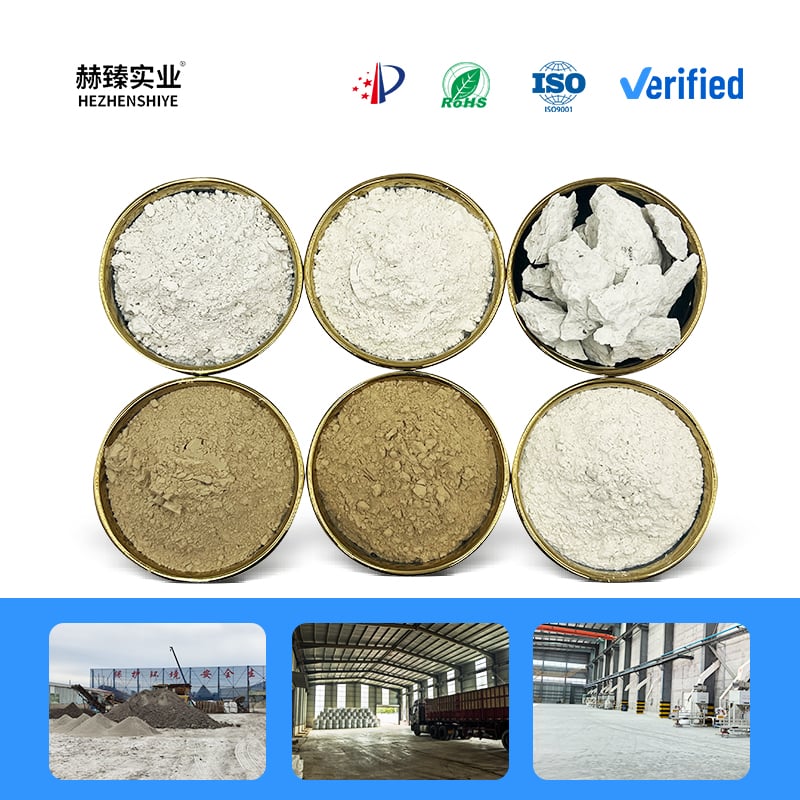
hezhensy industrial provides bentonite powder solutions for buyers who require more than a general-purpose clay material. Our service focuses on matching the product to the technical objective through:
- Selection of suitable natural mineral sources
- Controlled grinding and particle classification
- Purification and activation options
- Sodium, calcium and organic modification routes
- Application-specific grade recommendations
- Customized particle size and packaging
- Sample testing before commercial supply
- COA, MSDS and available technical documentation
- Support for trial orders and long-term international supply
Available specifications and supporting documents should be confirmed according to the product grade and intended market. Products for drinking water, food, feed, cosmetics, pharmaceuticals or other regulated applications require the appropriate grade and compliance review before use.
A More Reliable Route from Mineral Material to Industrial Performance
Bentonite powder combines water absorption, swelling, thixotropy, adsorption, binding and suspension control in one adaptable natural mineral platform. Its practical value is greatest when the mineral grade, modification method and application conditions are considered together.