EN
EN

News
Magnesium Hydroxide: Eco‑Friendly Neutralizing Agent for Industrial Wastewater and Flue Gas Desulfurization
Time : 2026-08-25
Summary: Industrial environmental‑protection plants are adopting high‑purity magnesium hydroxide as a mild‑acting inorganic neutralizer for wastewater pH adjustment, heavy‑metal removal and flue‑gas desulfurization. Compared with traditional strong‑alkali reagents, this mineral‑derived chemical delivers buffered pH control, lower corrosion risk and reduced secondary‑waste generation. Waste‑water treatment facilities, mining enterprises and thermal‑processing factories choose magnesium hydroxide to meet tightening global emission‑control standards. As enterprises pay more attention to sludge reduction and safe operation, magnesium hydroxide has become a cost‑effective environmental‑protection raw material for water‑treatment and exhaust‑gas purification workflows.
Core Advantages of Environmental‑Grade Magnesium Hydroxide
Buffered pH Adjustment Without Over‑Alkalization
One of the most prominent features of magnesium hydroxide is its weak‑alkali buffering property. When used for wastewater treatment, it stabilizes the pH value within a safe working range and avoids sharp pH spikes often caused by caustic soda or quicklime. Even with excessive dosage, the pH value will not rise sharply to strongly alkaline levels. This characteristic simplifies on‑site operation control and reduces the risk of re‑treatment for over‑adjusted effluent. For continuous‑flow industrial wastewater systems, the buffered reaction helps maintain stable water‑quality output and lowers the difficulty of automatic dosing control.
Effective Heavy‑Metal Capture and Sludge Optimization
Magnesium hydroxide can precipitate multiple dissolved heavy‑metal ions inside wastewater by forming insoluble hydroxide precipitates. It works well for mine wastewater, electroplating effluent and chemical‑plant sewage. Different from lime‑based treatment agents, magnesium hydroxide produces compact sludge with lower water content. It cuts sludge output and eases subsequent sludge dewatering, transportation and disposal pressure. For factories subject to strict sludge‑disposal cost constraints, this performance brings obvious comprehensive‑cost benefits in long‑term operation.
Low‑Corrosion and Safe On‑Site Operation
Magnesium hydroxide powder and its slurry present mild alkalinity. It brings far‑lower corrosion to dosing pipelines, reaction tanks and pump equipment compared with sodium hydroxide. Operating staff face less chemical‑burn risk during feeding and slurry preparation. No strong volatile irritant gas will be released during the reaction process. This improves workplace safety for environmental‑protection workshops and extends the service life of existing processing equipment, reducing equipment maintenance and replacement frequency for end users.
Technical Performance Notes
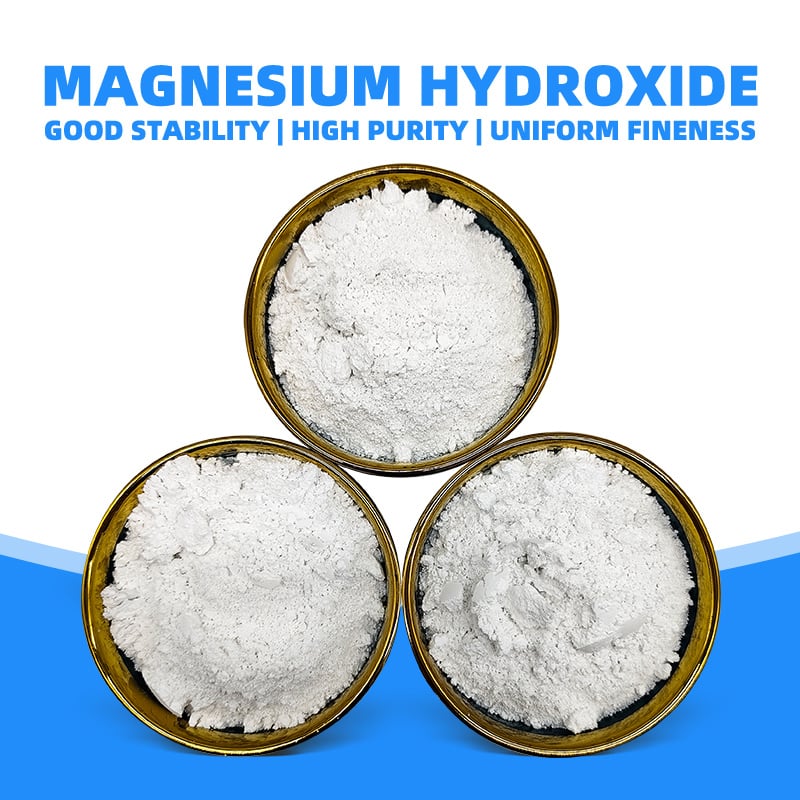
Environmental‑grade magnesium hydroxide is usually supplied in dry‑powder form or prepared into stable water‑based slurry for metering‑pump feeding. Key quality indicators include product purity, fineness, impurity content and slurry stability. Finer particle size speeds up solid‑liquid reaction efficiency; however, overly‑fine powder may bring dust‑handling challenges. Low heavy‑metal impurity is critical to prevent introducing extra pollutants into treated water. Users can select dry powder for small‑scale intermittent dosing or pre‑mixed slurry for large‑scale continuous environmental‑protection projects.
Primary Industrial Application Fields
Magnesium hydroxide serves two major environmental‑protection tracks. First, industrial wastewater treatment: mining wastewater, electroplating wastewater, chemical‑factory sewage and acid‑mine drainage for pH regulation and heavy‑metal precipitation. Second, flue‑gas desulfurization: it reacts with sulfur‑oxide components inside boiler and kiln flue gas to realize desulfurization purification. Besides these core scenarios, qualified magnesium hydroxide can also be used as auxiliary filling raw material in certain building‑material systems. Different working conditions require corresponding grades to guarantee stable reaction efficiency.
Customer Frequently Asked Questions
Q: Is magnesium hydroxide able to completely replace caustic soda in all wastewater neutralization scenarios?
A: It excels at buffered pH adjustment and heavy‑metal precipitation. For projects requiring rapid strong‑alkali lifting, combined dosing with other reagents may be required according to water‑quality test data.
Q: What are the key points for preparing magnesium‑hydroxide slurry on‑site?
A: Operators should pay attention to stirring speed and sedimentation prevention. Appropriate dispersing measures help avoid powder settlement at the bottom of storage tanks and guarantee stable feeding concentration.
Q: Will magnesium‑hydroxide treatment generate new pollution in discharged water?
A: Qualified‑grade magnesium‑hydroxide will not introduce toxic components. Reaction products are stable precipitates, which can be separated through conventional sedimentation facilities under normal operating conditions.
Request Technical Support for Magnesium Hydroxide
If you are sourcing reliable magnesium hydroxide for wastewater neutralization, heavy‑metal removal or flue‑gas desulfurization projects, our team can provide grade‑selection advice and sample support. We supply dry‑powder and slurry‑adaptable magnesium‑hydroxide grades for diverse environmental‑protection working‑conditions. Reach out to our specialists today and share your water‑quality parameters or exhaust‑gas indexes to get customized product recommendations for your production lines.