EN
EN
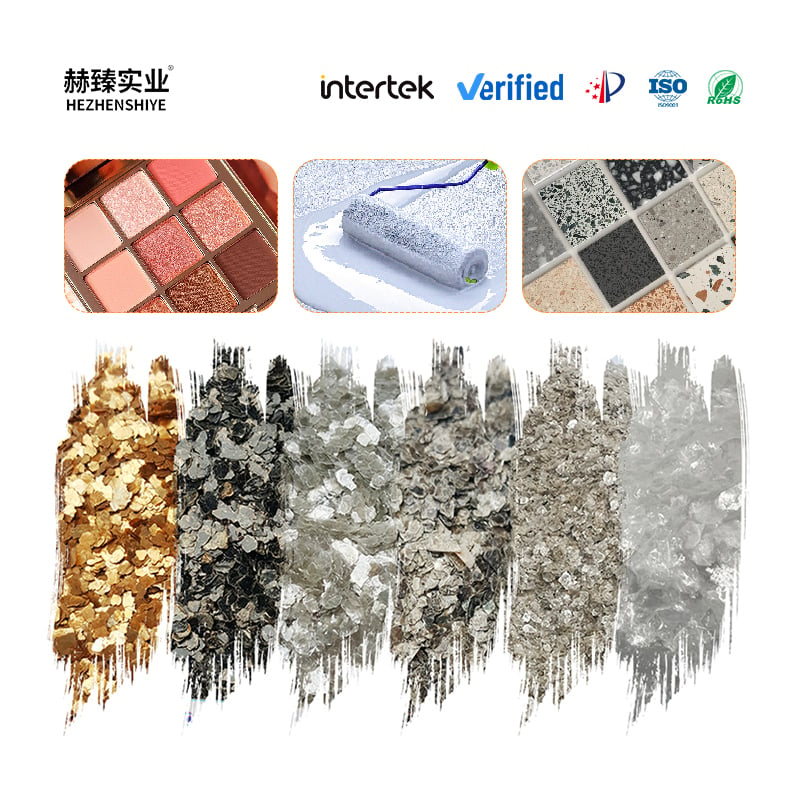
In the field of industrial minerals, there is probably not a single material that combines such good thermal insulation properties with such good electrical insulation as the mineral mica. Hebei Hezhen Industrial Co., Ltd. has been able to utilize our abundant local resources to select and produce the best quality mica flakes and offer you products with uniform particle size, consistent purity and high performance to all of our customers. Mica is a mineral that belongs to the phyllosilicates group. Its characteristic layered structure imparts resistance to heat, electricity and chemical corrosion naturally. In this blog post, we will demonstrate why mica flakes have their special features and where the material plays an important role.
The Crystalline Structure: The Foundation of Resistance
The secret to the outstanding thermal and electrical resistance of mica is its crystalline structure. Mica is an exceptionally lamellar phyllosilicate mineral which consists of individual layers held together by rather weak ionic bonds. It is possible to split mica into extremely fine, but also durable mica flakes. Mica’s crystal structure allows it to maintain electrical conductivity at much lower levels than many common non-metallic substances. Each layer consists of tightly interconnected silicon-oxygen tetrahedra which house additional water and potassium ions between them. These structures lend mica resistance against chemicals and extreme heat-at high as 500°C (932°F) for phlogopite. Atoms within each sheet are very tightly bound to each other so electrical currents cannot move easily across the plane, which creates mica's excellent dielectric properties. The structure we've outlined has allowed us to develop our crushing and classification methods so as to maintain the integrity of the natural flakes so they continue to function efficiently in the industrial sphere.
Thermal Resistance: Withstanding Extreme Temperatures
The reason mica flake is a widely respected material in high temperature applications, is that it doesn't readily degrade or even deform when exposed to sustained heat exposure. Unlike many plastics or fibers that break down, scorch, or melt, mica is non-flammable. This property makes it highly effective as an additive for flame retardants and fire resistant paints—an area that our company specializes in. Mica flake is used as a key ingredient in many insulating materials because of its non-flammability. Heat from the surrounding environment passes much less easily across the mica than it does through any plastic or organic compounds used in applications, including oven door insulation, heating element support and high-temperature gaskets. When you use mica flakes in any heat resistant application such as high-temperature engineering plastics or refractory linings-product lines we are well-versed in-the flakes provide an insulating barrier against the transfer of heat. In addition, the high aspect ratio mica flakes will overlap and align, effectively providing a protective scale that can deflect heat from surrounding materials. In quality control processes at Hebei Hezhen, we ensure that our mica flakes do not exceed specified temperature tolerances during processing, preserving the intrinsic insulating and heat blocking properties.
Electrical Insulation: High Dielectric Strength in Practice
One of the most efficient natural electrical insulators, mica exhibits dielectric strength usually above 4,000 V per mil. Embedded into composite systems, its flakes form minute walls blocking the flow of electricity in components such as capacitors, commutators, and the support for the hot filaments of heating elements. Mica's high resistivity (approximately 10¹³ ohm·cm) and low power factor minimize electrical power loss and prevent arcing. Our mica flakes enhance the breakdown voltage of electrical appliances—particularly in epoxy resin matrices—making them ideal for use in our epoxy and silicone rubber products. Mica flakes, evenly dispersed due to their fine size, are also useful for Hebei Hezhen's production in very thin layer for an effective electrical insulation.
Synergistic Effects in Coatings and Composites
Combined with other fillers and binders, the synergy among them contributes significantly to improving the electrical conductivity, heat resistance, while they work mutually for both simultaneously. In intumescent fire-proof coating, the mica flakes are used to hold back the char layer at elevated temperatures to become effective. Mica effectively limits the thermal expansion of epoxy resins, helping prevent cracking at high temperatures and maintaining insulation integrity in polymer composites. In addition, mica is chemically inert and thus does not interact with the resin systems and keep stability in terms of long-term use. Our mica products are of high purity, with careful attention to particle size distribution. This helps us to meet demand for any industries—from insulation varnishes to flame retardant cables, electronics to aerospace components. With ISO9001:2000 production, our facilities allow us to custom control our mica flake production from ultra-fine sizes for insulation varnish up to large sizes for gaskets. If you need mica that works wonders to improve the performance of your processes from thermal and electrical point of view, choose us for ultimate protection and efficiency.
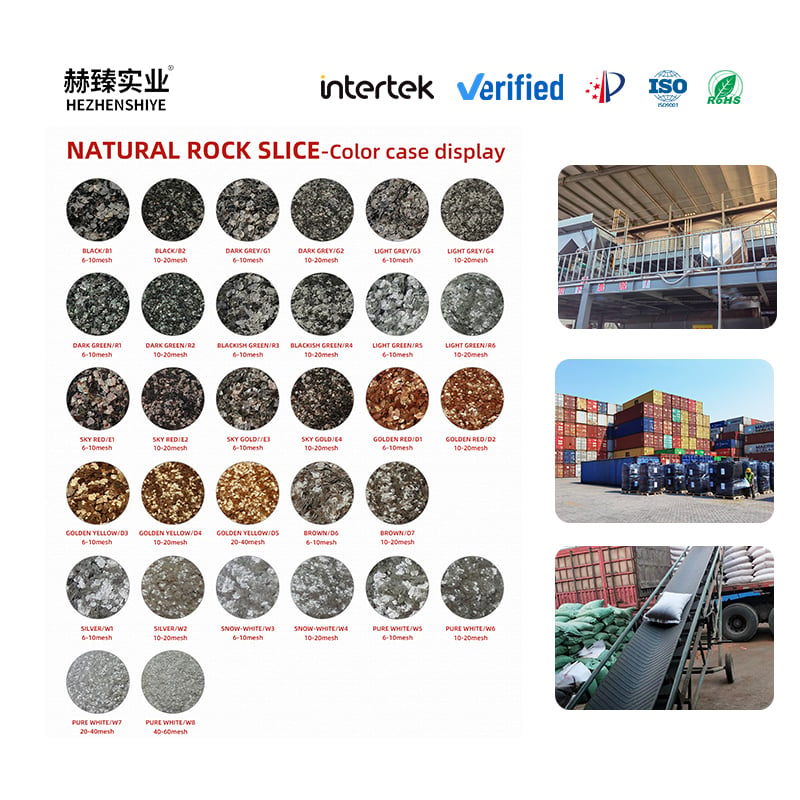
Table of Contents
- The Crystalline Structure: The Foundation of Resistance
- One of the most efficient natural electrical insulators, mica exhibits dielectric strength usually above 4,000 V per mil. Embedded into composite systems, its flakes form minute walls blocking the flow of electricity in components such as capacitors, commutators, and the support for the hot filaments of heating elements. Mica's high resistivity (approximately 10¹³ ohm·cm) and low power factor minimize electrical power loss and prevent arcing. Our mica flakes enhance the breakdown voltage of electrical appliances—particularly in epoxy resin matrices—making them ideal for use in our epoxy and silicone rubber products. Mica flakes, evenly dispersed due to their fine size, are also useful for Hebei Hezhen's production in very thin layer for an effective electrical insulation.
- Synergistic Effects in Coatings and Composites