EN
EN

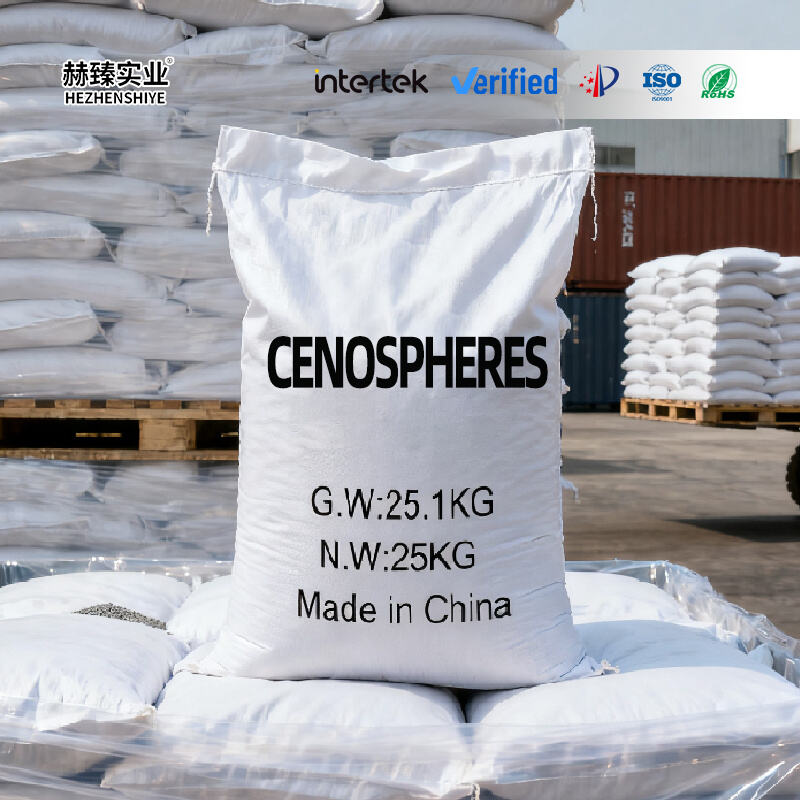
Composite materials are valued because they combine the properties of their individual components. Many high-performance composites suffer from excessively high weights. Such composites are often used in applications where every kilogram of weight saved matters. Hollow ceramic microspheres produced from coal fly ash are a brilliant solution for reducing weight of the composite. By replacing some of the filler or the resin with the lightweight microspheres the composite density is considerably reduced without substantial sacrifice in other characteristics. Hebei Hezhen Industrial Co., Ltd specializes in crushing, processing, and selling non-metallic minerals, including cenospheres. Hebei Hezhen has over sixty engineers and technical specialists on staff. Its technical expertise and abundant resources enable the production of high-quality cenospheres for composites.
Understanding the Density Advantage of Cenospheres
The density reduction achieved by addingcenospheres arises because each microsphere is a glass bubble containing either a partial vacuum or low density gases. Cenospheres have true densities ranging from 0.4 to 0.8 grams per cubic centimeter. Standard composite fillers have the following approximate densities(g/cm³): calcium carbonate is 2.7, talc is 2.8 and lightweight glass microspheres typically above 1.0. Polymer resins typically fall between 1.0 and 1.4 g/cm³. When replacing a percentage of a polymer resin with a low density filler like cenospheres, the composite density can be reduced by 20% to 50% or more. Weight saving is therefore important for application such as marine composite, aerospace, automotive parts, and sports equipment — due to performance benefit (e.g. reduced fuel consumption) or simply ease of handling. The density is relatively consistent across batches from Hebei Hezhen, and can be accurately modeled during the design of parts manufactured from cenosphere-filled composites.
The Spherical Shape Enabling High Filler Loading
Besides being very light, spherical cenospheres also have the ideal geometry to facilitate dense packing. The theoretical surface area to volume ratio of spheres is the minimum among all solid forms. This means less resin needs to be used to wet the spheres’ surface. In other words, high volume of cenospheres can be added to a resin mixture without a drastic viscosity increase. A higher volume of cenospheres translates into greater density reduction. The shape also helps resin flow evenly and efficiently during composite molding, making it easier to manufacture complex shapes, and produce void-free cast and injection molding parts. The sphericity is under tight control for cenospheres sold by Hebei Hezhen Industrial Co., Ltd.
Maintaining Mechanical Properties at Lower Density
A common problem with reducing composite density by adding lightweight fillers is the loss of mechanical properties, especially compressive and flexural modulus. Cenospheres however don’t have such shortcomings compared to other microspheres. The rigid glass shell has exceptional compressive strength (3000 to 5000 PSI or more depending on grade) which allows very dense packing of filler. Compared to glass bubbles and other very light hollow spheres, cenospheres usually retain acceptable mechanical properties at much lower densities. Tensile strength tends to decrease at high loadings but often remains at an acceptable level for weight critical application where weight saving is the main priority. For deep-sea floatation modules or syntactic foams, cenospheres present the best compromise between the two properties. Documented crushing strengths are given for each batch sold by Hebei Hezhen Industrial Co., Ltd.
Reducing Resin Consumption and Cost
Density reduction by adding cenospheres also results in material cost saving, because resin is the most expensive component of a composite. The lighter spheres replace more expensive resin on a volumetric basis; typically, a kg of cenospheres has twice or three times the volume of a kg of resin. Reducing resin content cuts costs, and the effect is particularly noticeable in large scale production. Reduced weight can also lead to lower transport costs. Hebei Hezhen Industrial Co., Ltd. guides manufacturers on an optimum mix of cenospheres loading to save cost without compromising mechanical properties or density reduction benefits.
Applications in Syntactic Foams and Buoyancy Modules
Syntactic foams are composites of cenospheres and resin. They typically have a density below 0.6 g/cm³ and sufficient compressive strength for deep-water applications. Deep-sea equipment and underwater vehicles use syntactic foams for buoyancy due to their ability to withstand hydrostatic pressure, something that most foams would not withstand. Some high-quality cenospheres can be pressed under thousands of meters of water. Hebei Hezhen Industrial Co., Ltd. works with marine composite manufacturers in the supply of cenospheres with the crush strength suitable for their applications and for deep water usage. Our quality system certified to ISO9001:2000 International Standards will assure you of our quality.
Conclusion
The excellent density reduction, property, sphericity, shape, and packing characteristics of cenospheres make them beneficial for a wide range of applications-from syntactic foam and construction materials to sports equipment. Please contact us if you would like to test cenospheres for your application.