EN
EN

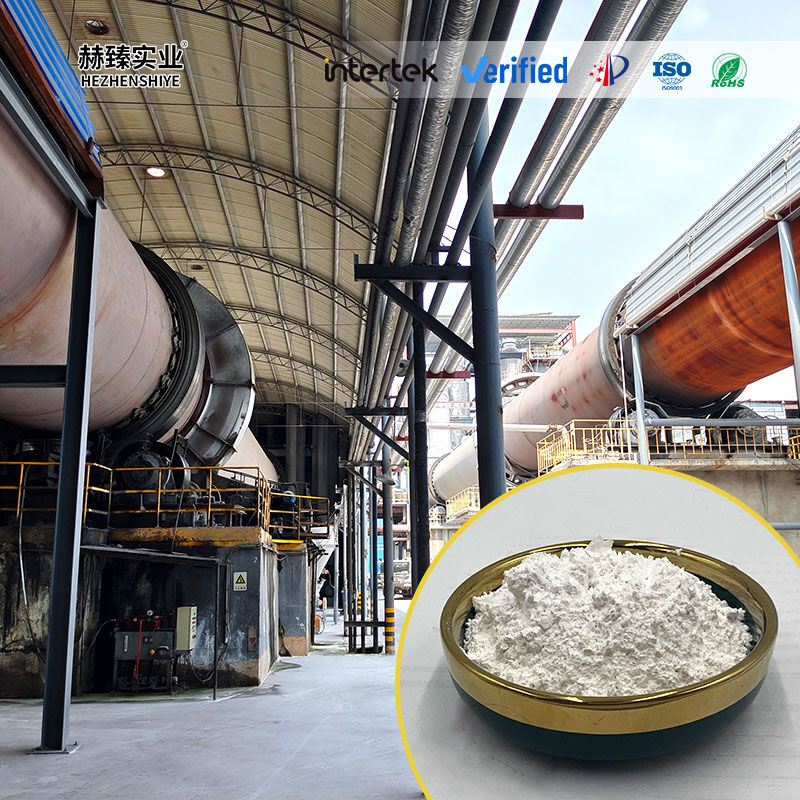
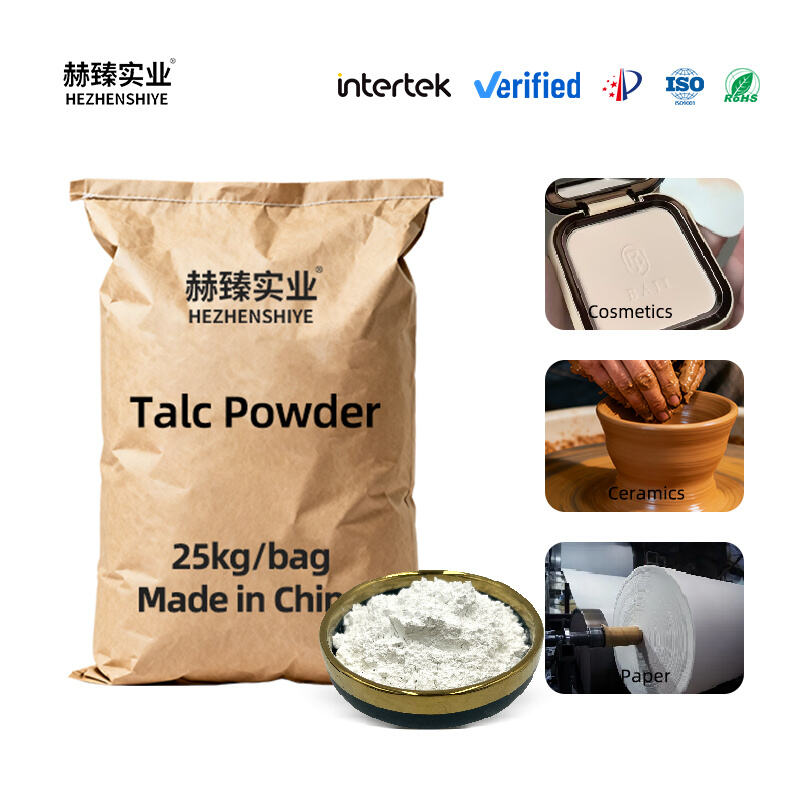
Talc powder has a wide range of applications in plastics and rubber industries as one of the most common mineral fillers. The combination of the following natural characteristics such as softness, platy nature, chemical inertness and high thermal stability has made it an ideal additive to enhance the performance of products in relation to lowering cost of production. The Hebei Hezhen Industrial Co., Ltd. is a company that is involved in the crushing, processing and sale of non-metallic minerals such as the talcum powder series. Our company has over 60 engineers and college-trained employees who have the technical expertise and local resources advantage to manufacture high quality talc powder to be used in plastic and rubber.
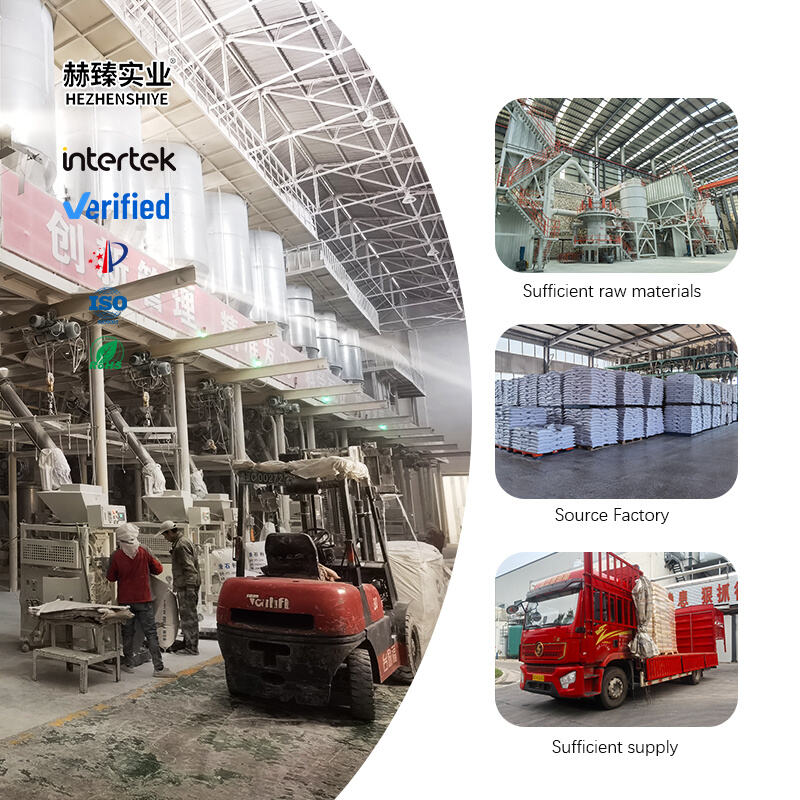
The Platy Structure and Its Reinforcement Mechanism
The characteristics of the talc powder in plastics and rubber are mostly due to the distinctive shape of the particles. Talc is a layered silicate mineral, which naturally occurs in platy or flake like particles. During processing, these plates align with the flow direction when incorporated into polymer matrices. After the plastic or rubber has solidified the aligned talc plates become microscopic reinforcement. They enhance the stiffness and creep resistance while reducing warpage. The high aspect ratio of the talc plates will enable stress transfer between the polymer and filler efficiently unlike in the case of spherical or blocky fillers that do not offer much reinforcement. This type of reinforcement enables manufacturers to use less costly resin instead of more costly resin and retain or even enhance mechanical properties. Hebei Hezhen Industrial Co., Ltd. has the modern advanced production technology which can preserve the platy structure of our talc powder.
Improving Stiffness and Heat Deflection Temperature
Enhancement of stiffness of finished products is one of the main reasons why plastic producers add talc powder. While reducing has a much greater flexural modulus than unfilled resin. The increased stiffness will allow thinner wall sections in molded parts; reducing material usage and process times. It also helps to achieve increased heat deflection temperatures. The particles of talc inhibit the movement of polymer chains at higher temperatures enabling the material to retain its shape under load. When producing automotive interior components, appliance parts or industrial housings this property is valuable in ensuring stability in heat. Talc powder can be used in many polymers and Hebei Hezhen Industrial Co., Ltd. Offers grades suited for the production of plastic items requiring strength and heat resistance, using a specific controlled particle size and purity to meet the needs of different polymers.
Reducing Warpage and Shrinkage in Molded Parts
The process of injection molded plastic parts is also characterized by warping and anisotropic shrinkage due to uneven cooling of the compound, as well as due to molecular orientation. Talc powder can be used to overcome these problems. The platy talc particles provide a smoother thermal expansion behavior throughout the part being molded. These reductions diminish the differential between the flow direction and cross flow shrinkage, which commonly leads to warpage. This results in more tolerance parts which require no post-mold straightening or trimming. This is critical to the manufacturer of precision components such as automotive lighting housings, electronic enclosures or medical device components. Hebei Hezhen Industrial Co., Ltd. offers technical support to choose the correct grade of talc and loading level based on their part geometry and tolerance needs.
Enhancing Surface Finish and Printability
Polypropylene with talc is suitable in instrument panel and door trim as it offers the appropriate balance of stiffness and surface quality in automotive interior. Talc is used in rubber products like gaskets and seals as a processing aid to minimize surface defects and enhance release of the products out of the molds. Hebei Hezhen Industrial Co., Ltd. produces talc powder having controlled top-cut particle sizes to meet given surface finish targets. We have a through-train service, which involves testing and quality documentation of each shipment.
Cost Reduction Through Resin Extension
The pressure on the economies of plastic and rubber producing companies is only growing, and cost-cutting is always a priority. Talc powder is much cheaper than the majority of commodity resins and synthetic rubber. Substitution of part of polymer with talc saves on the cost of raw materials directly. Since the density of talc is usually greater than that of most polymers, the substitution is usually done on a weight basis, although the savings are still significant. Moreover, talc may also enhance productivity in processing of both injection molding and extrusion by decreasing cycle time. Compositions of talc transport heat faster thus providing reduced cooling times. These cycle time improvements, when summed, translate into large capacity improvements and a reduction in the cost per part. The company, Hebei Hezhen Industrial Co., Ltd. aids the customers in the optimization of the level of loading talc to ensure the optimal balance between cost savings and property retention.
Talc powder is one of the important materials in the industry of plastic and rubber. Talc can add stiffness and tensile strength, decrease warpage, enhance the quality of the surface of products and decrease cost. Spherical and blocky fillers cannot offer any reinforcement mechanisms that the platy structure of talc offers. Hebei Hezhen Industrial Co., Ltd. is eager to talk business with domestic and foreign traders and to cooperate in good faith and aim at a mutual development.